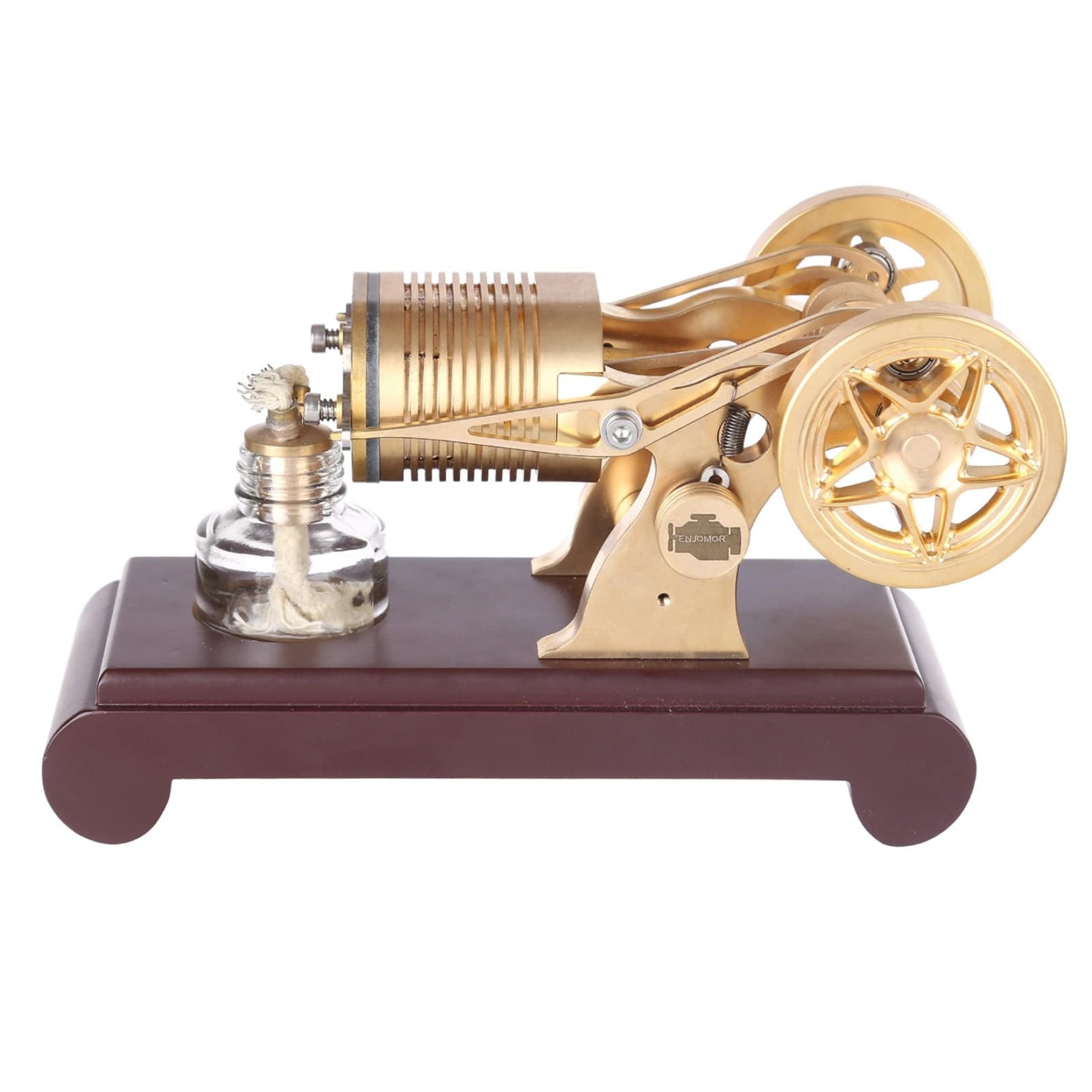
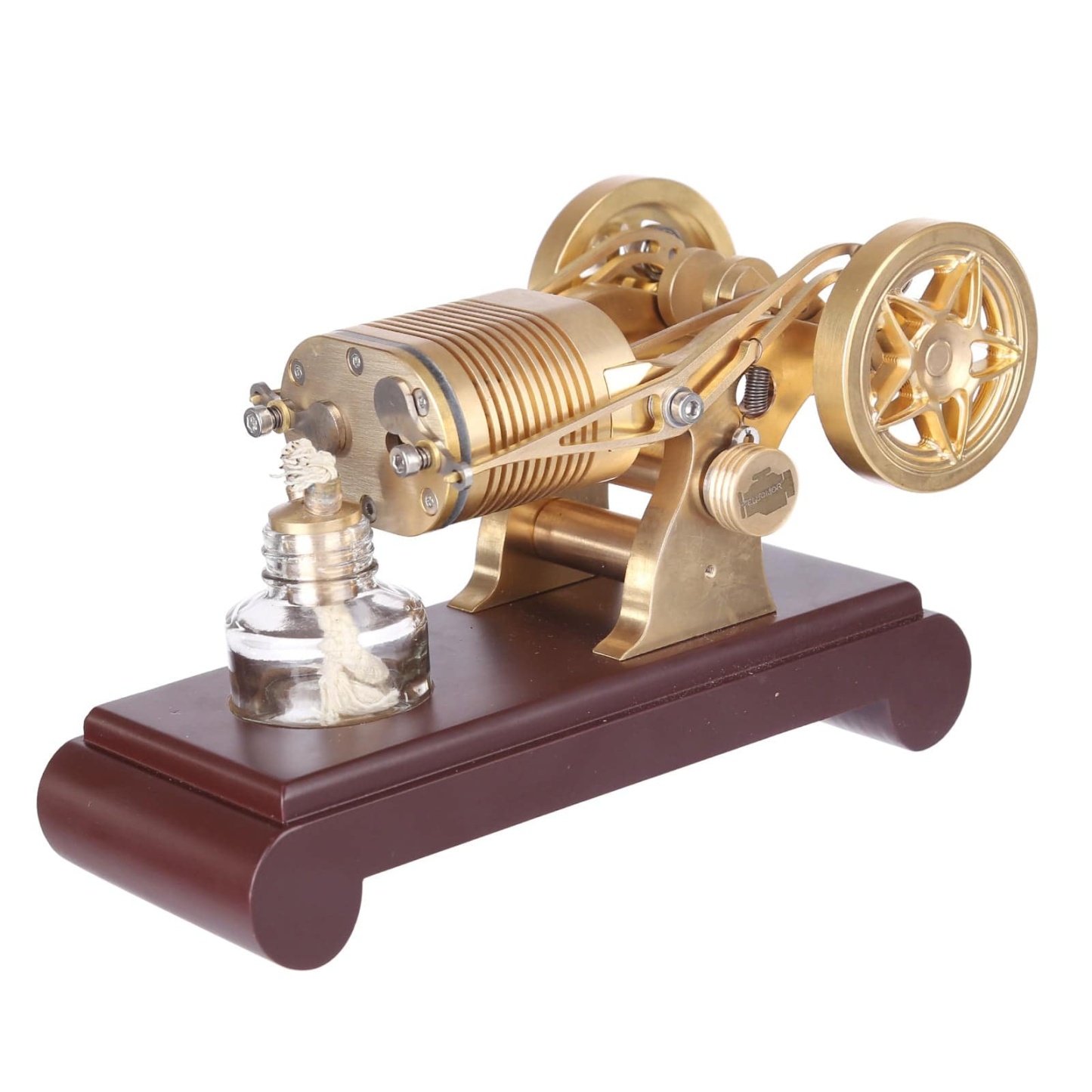
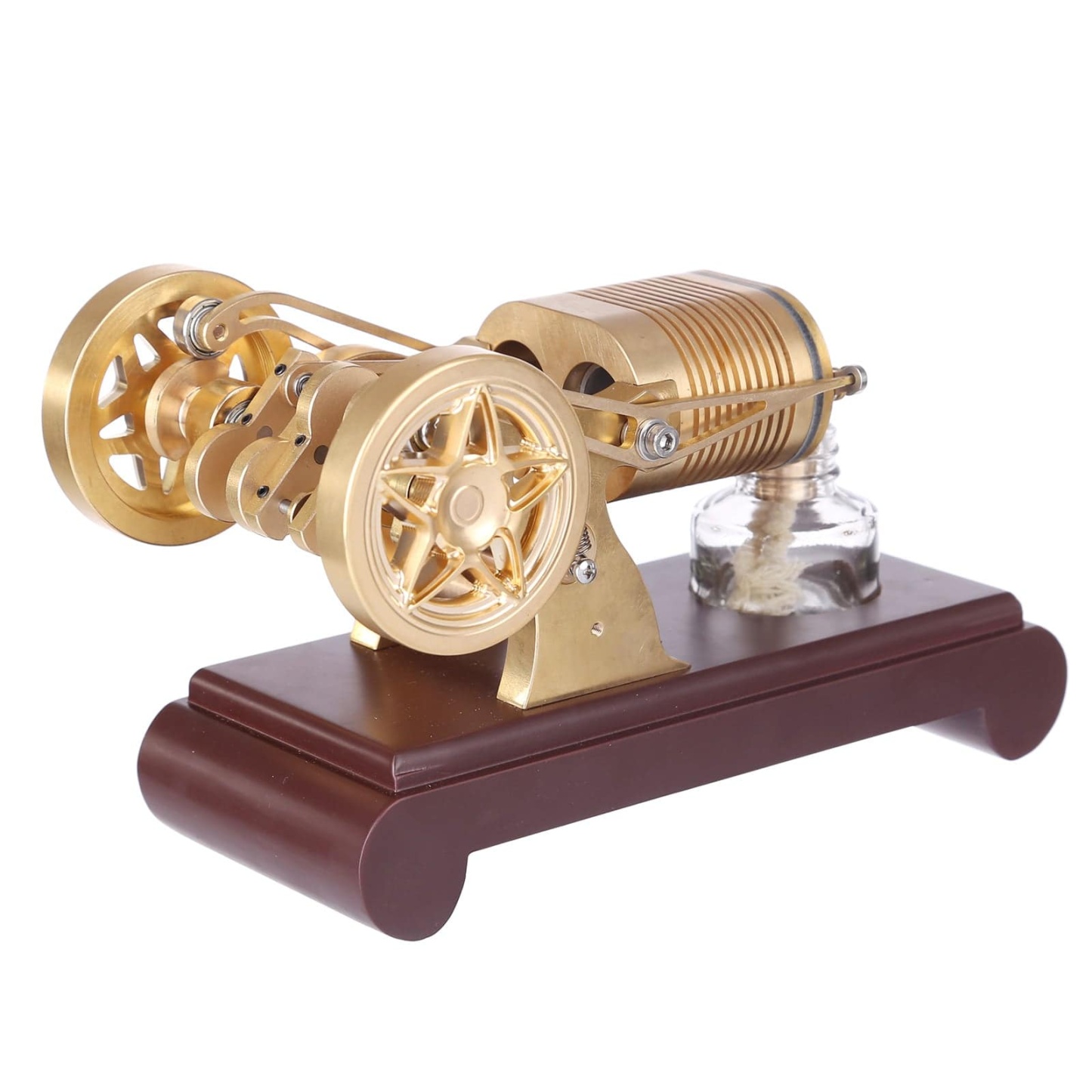
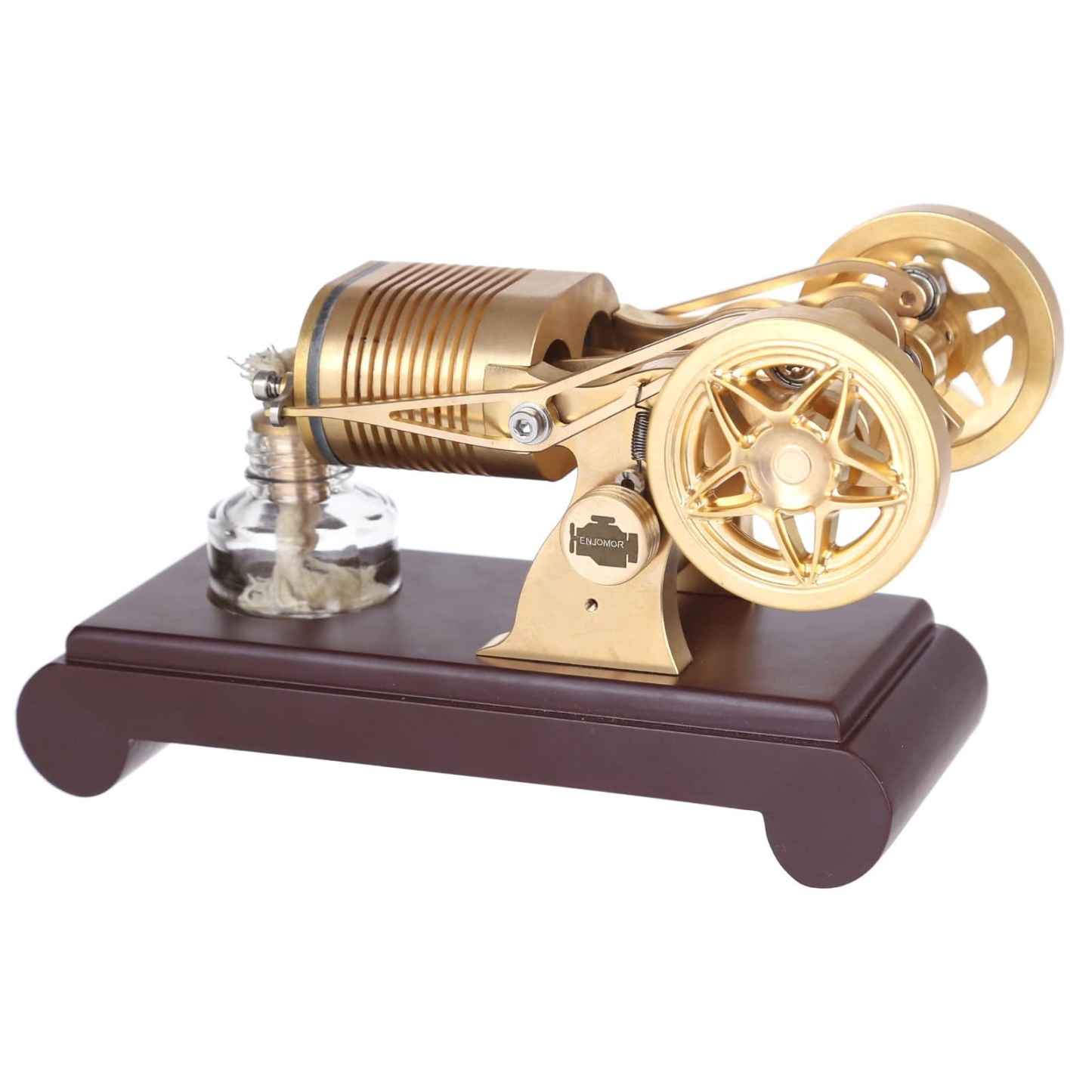
Brass Two-Cylinder Flame Licker Vacuum Engine Model Gift
Hero Section: The Engine That Breathes Fire
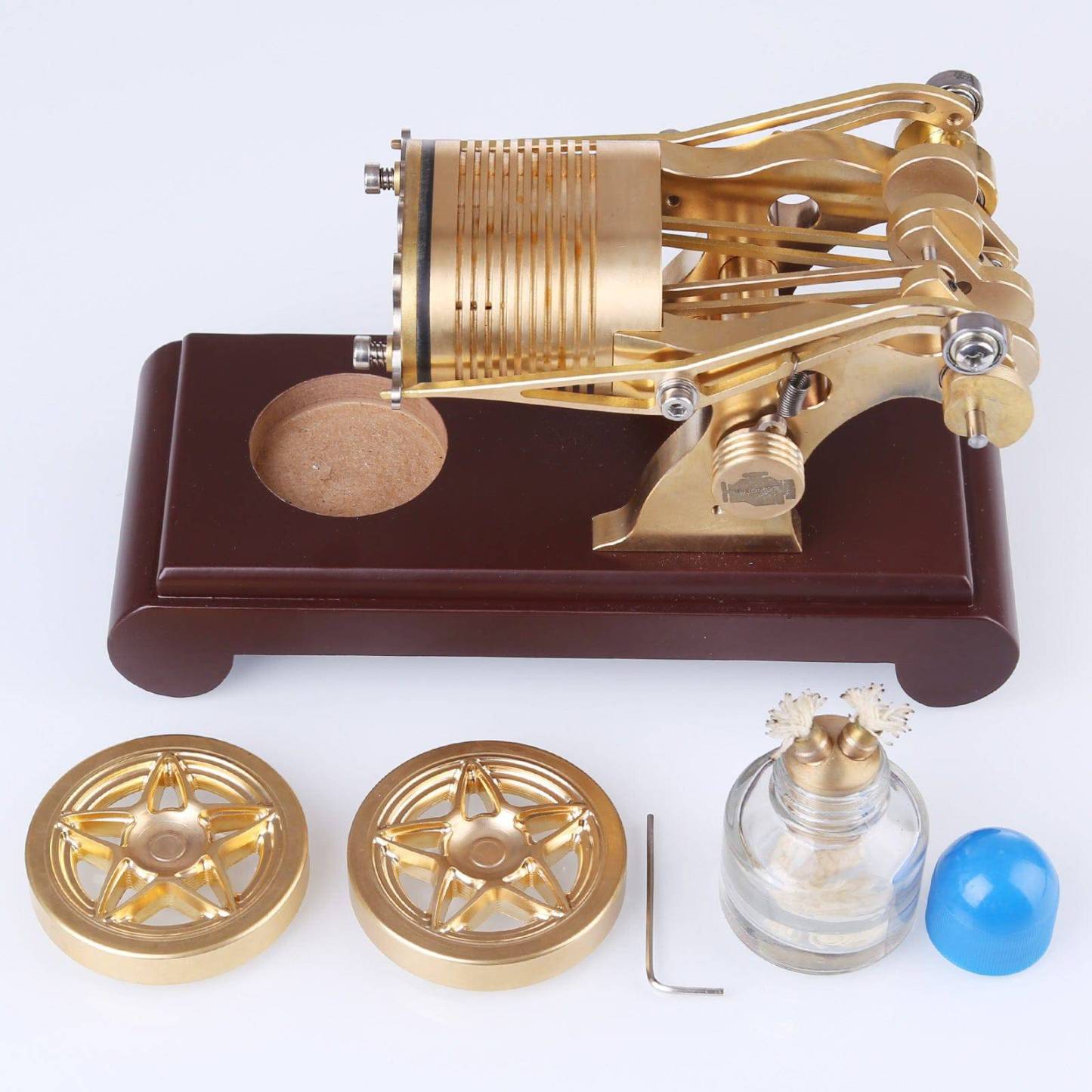
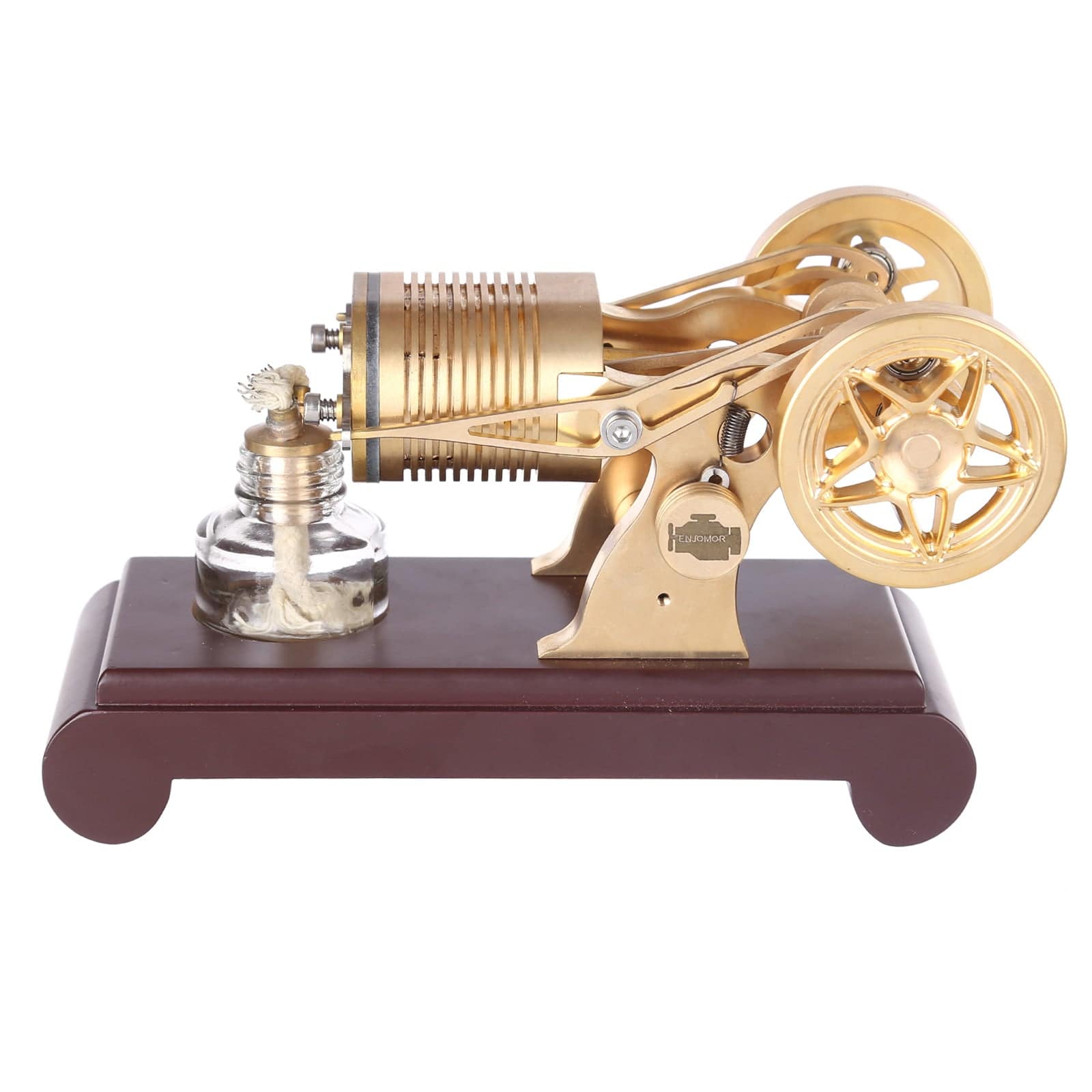
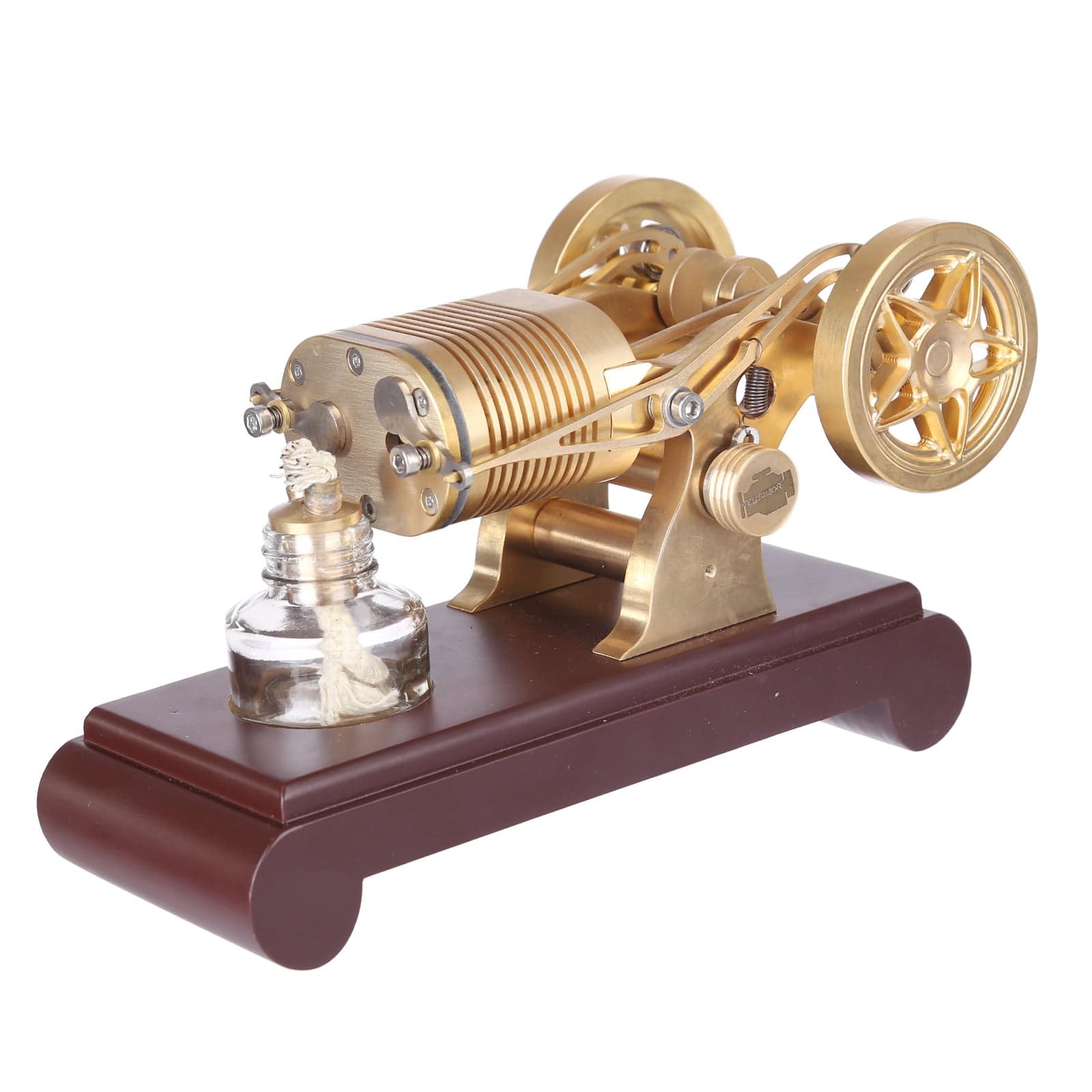
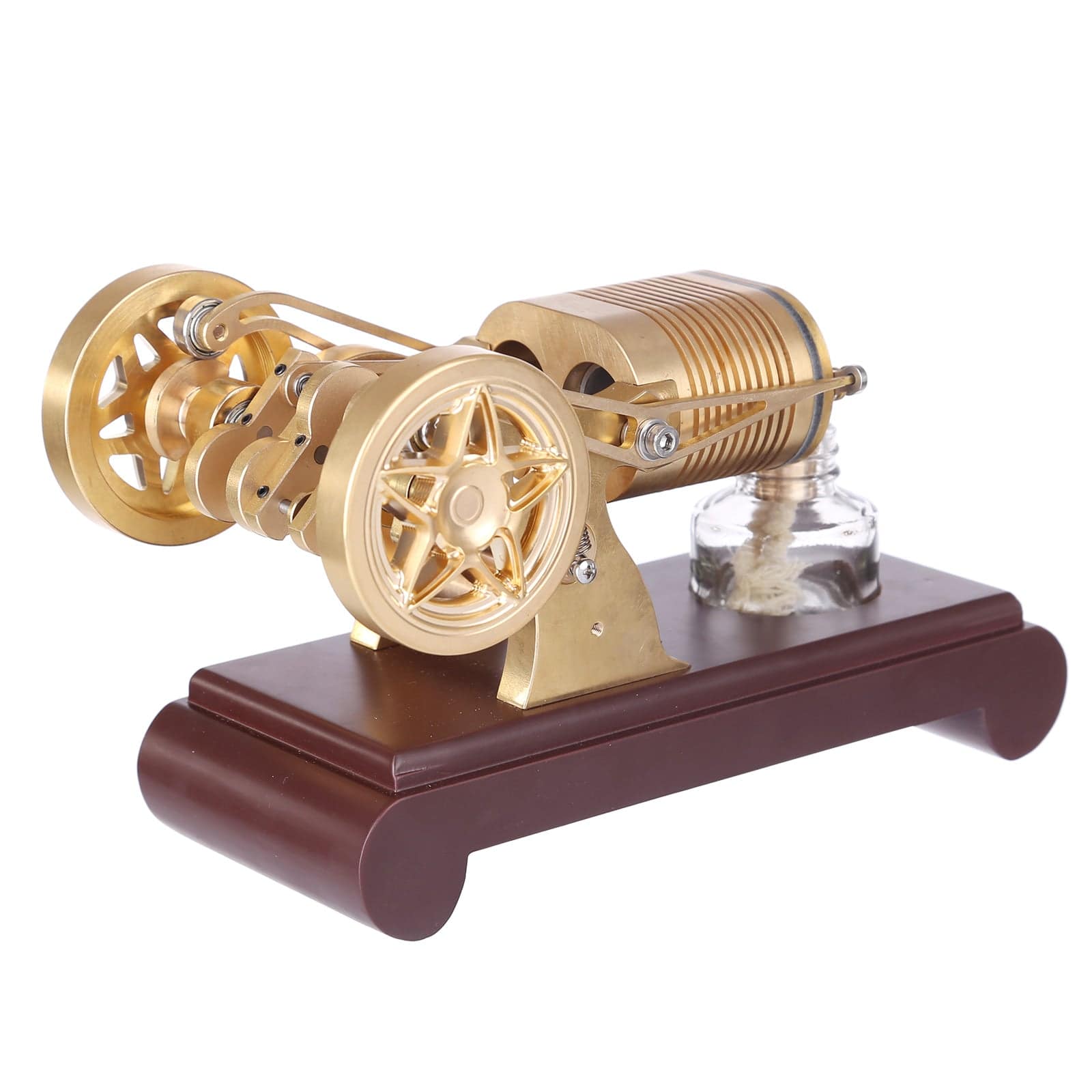
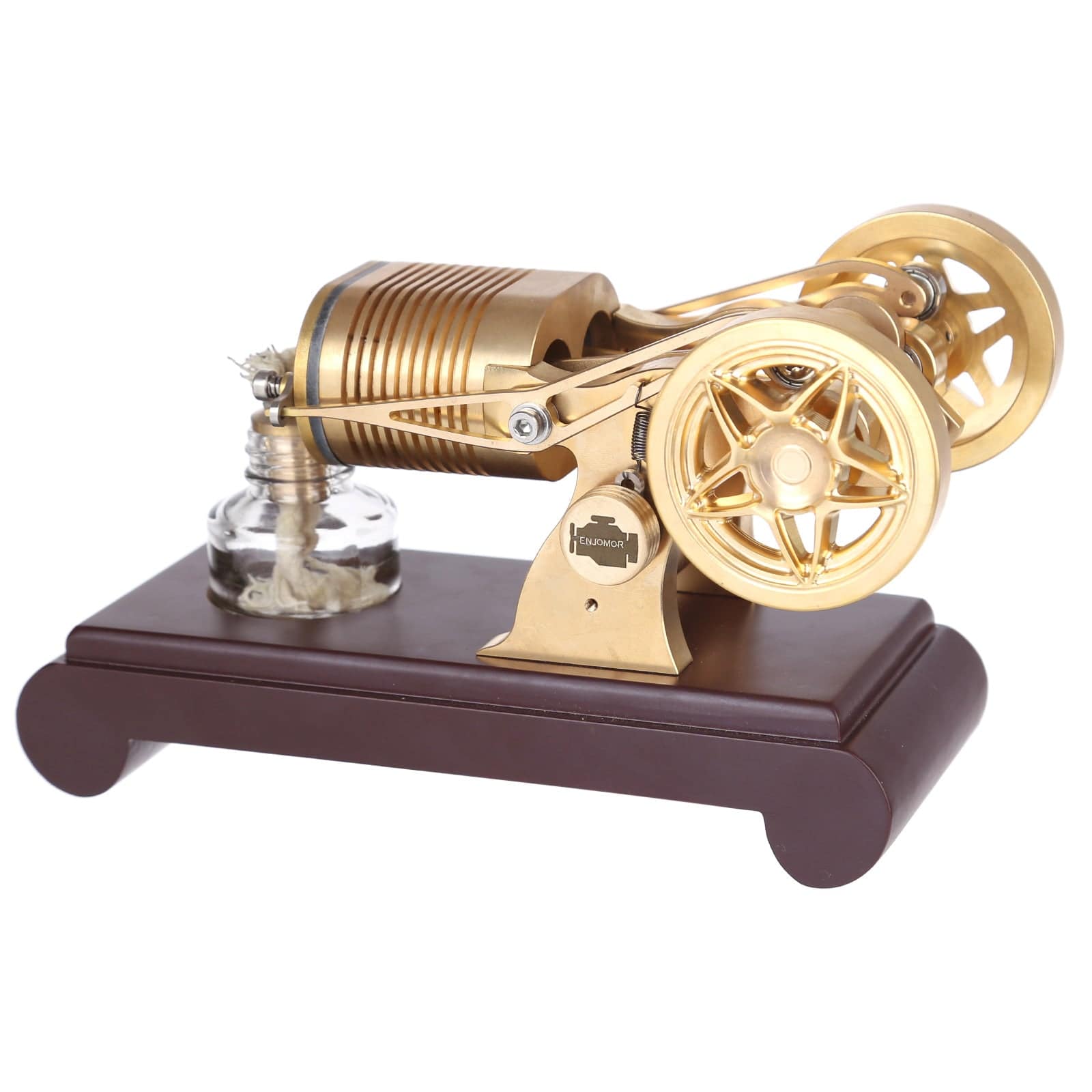
There is no mechanical motion quite like a "Flame Licker." Unlike standard engines that hide the combustion, this Two-Cylinder Vacuum Engine literally draws the open flame into its cylinders with every stroke. It is a mesmerizing, rhythmic display of fire and mechanics. The distinct "pop-pop-pop" sound of the valves closing and the visual of the fire dancing into the brass heart make this model a living piece of kinetic art. It is the ultimate desktop companion for the mechanical connoisseur who appreciates the raw, unhidden history of power.
Why Choose This Two-Cylinder Vacuum Engine?
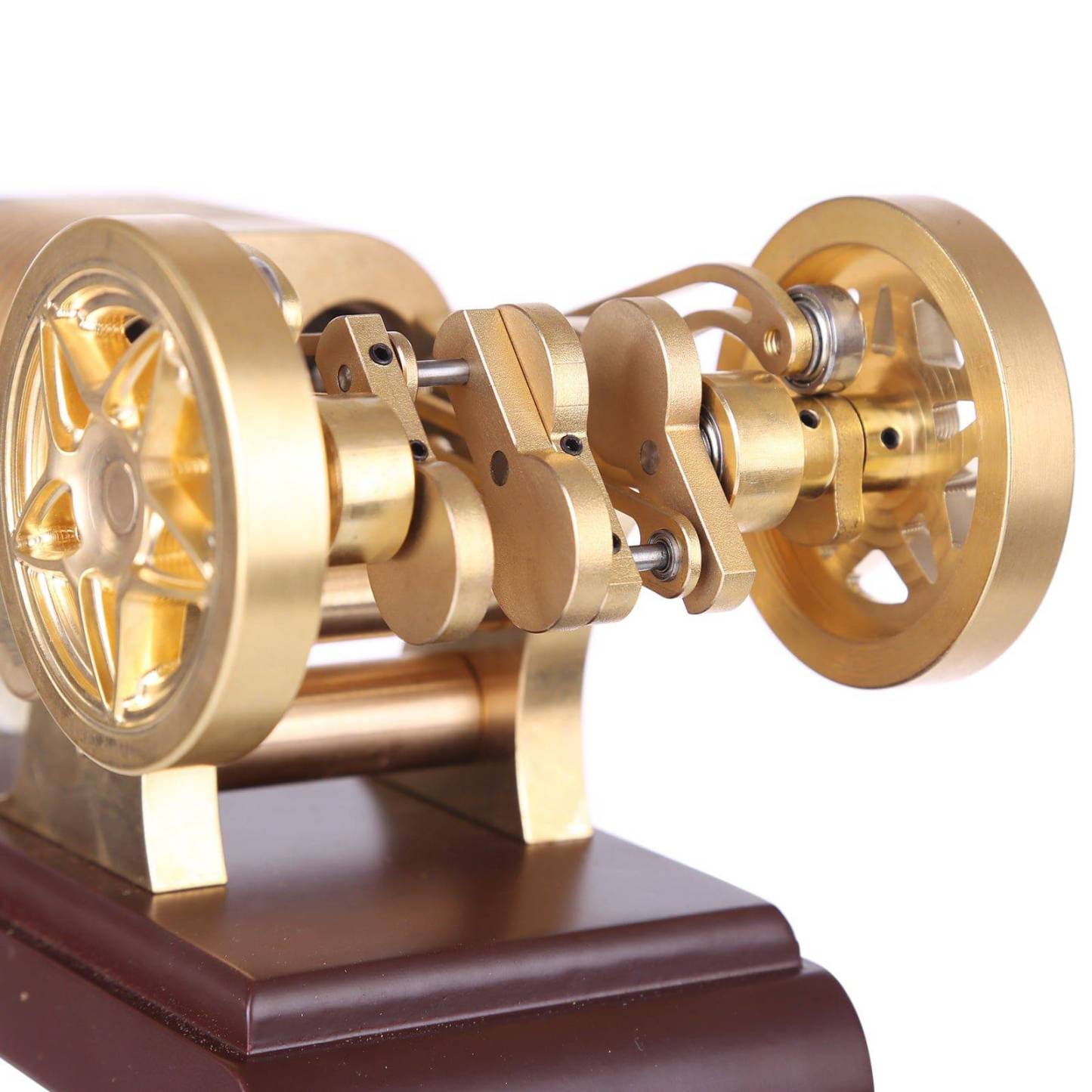
- Double the Action: Most vacuum engines are single-cylinder. This model features a Twin-Cylinder V-configuration, providing smoother operation, more torque, and a complex, satisfying mechanical exhaust note that single-cylinder models cannot match.
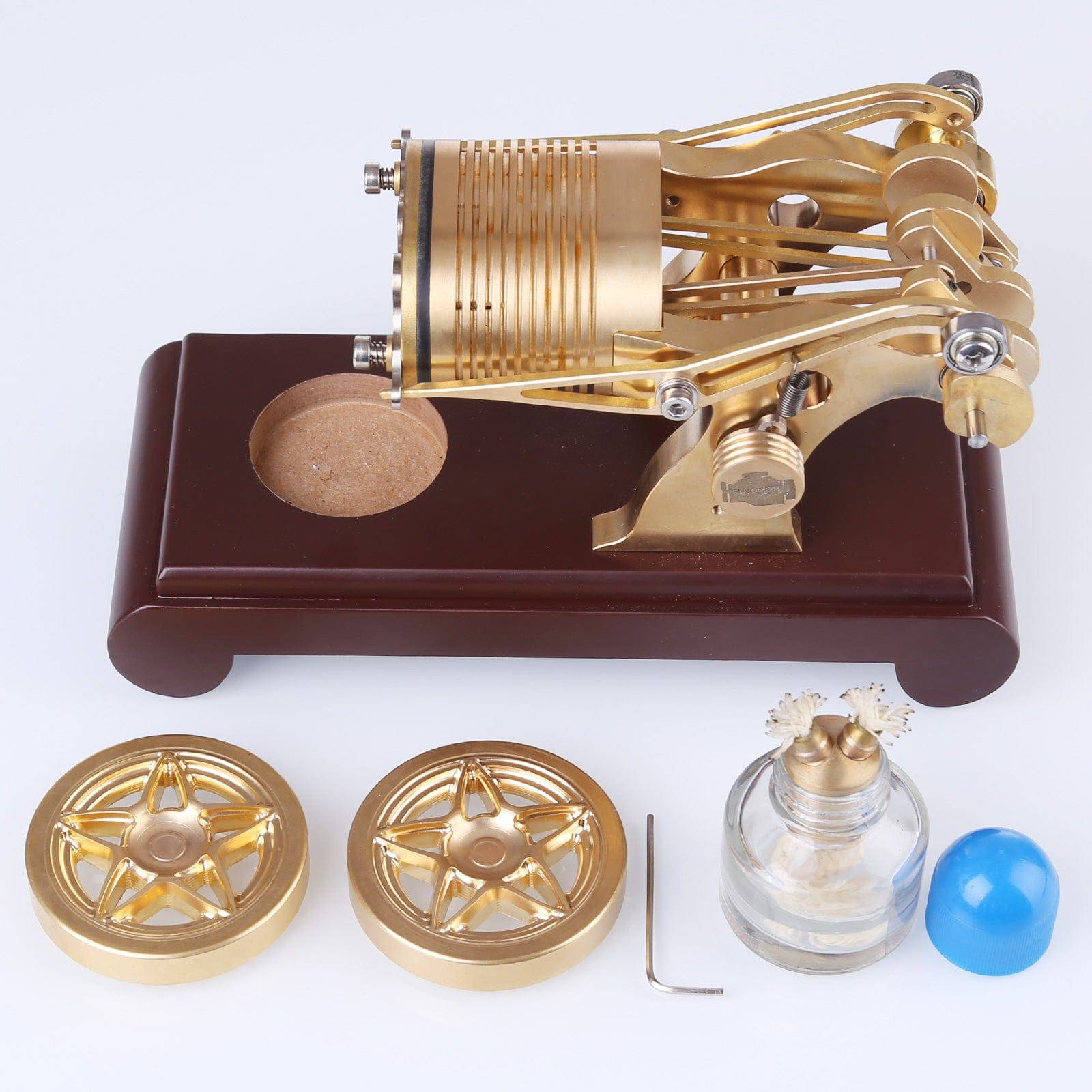
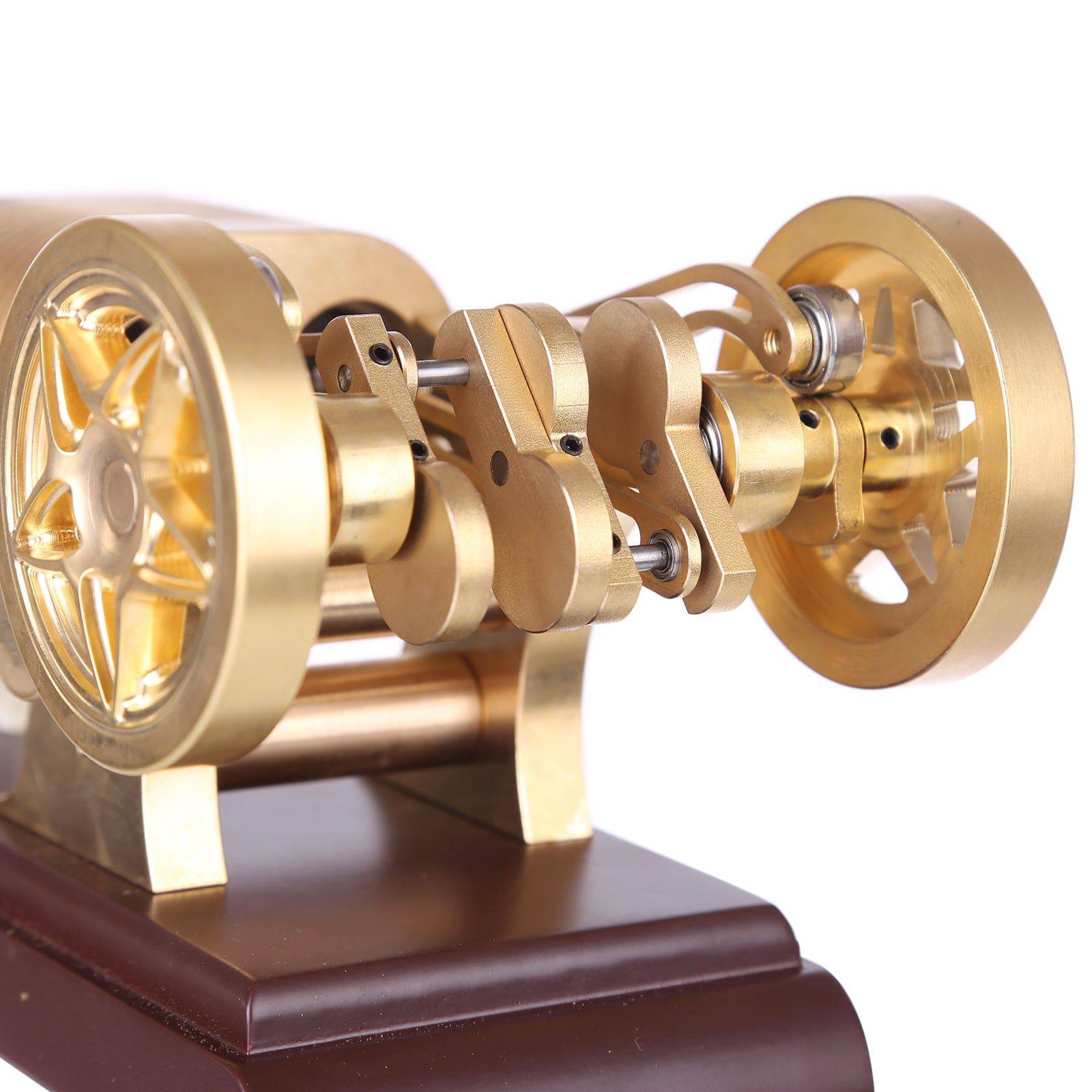
- Heavyweight Brass Construction: Weighing in at over 2kg, this is not a flimsy toy. It is machined entirely from high-quality brass. The weight dampens vibration, while the sandblasted and oxidized finish gives it a vintage, golden-age industrial look that resists tarnishing.
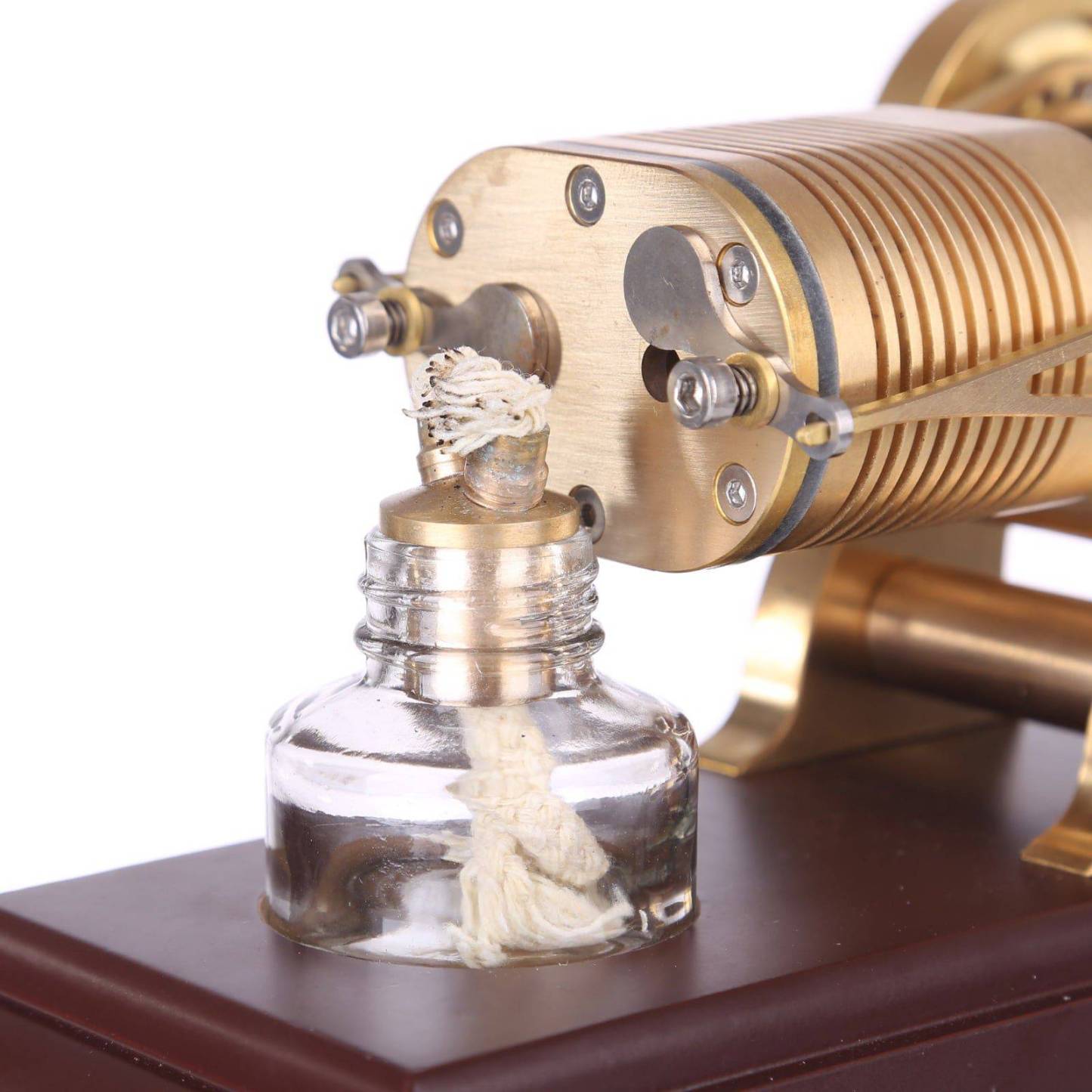
- The "Flame Licker" Spectacle: It gets its name for a reason. You can watch the valves open to swallow the flame, then snap shut to create the vacuum. It is a transparent lesson in thermodynamics that captivates audiences of all ages.
- Heirloom Quality: With its imported heat insulation board and craftsman-level CNC processing, this engine is built to last. It is designed to be a display piece that can be passed down, not just played with and discarded.
Technical Highlights: How the "Vacuum" Works
- The Vacuum Principle: Unlike an explosion engine that pushes the piston, this engine pulls it. The flame is sucked into the cylinder. When the valve closes, the hot gas hits the cooler cylinder walls and contracts instantly. This creates a partial vacuum, and atmospheric pressure pushes the piston back. It is a brilliant use of physics.
- No Spark Plugs, Just Physics: The engine relies on a precise mechanical valve system. The timing of the valve opening and closing is critical, and this model is factory-tuned for reliable performance.
- Efficient Cooling: For a vacuum engine to work, the cylinder must stay relatively cool compared to the flame. The brass construction acts as a heat sink, but the design ensures the "hot" and "cool" phases of the cycle are distinct for continuous operation.
Specifications
- Engine Type: Two-Cylinder Vacuum Engine (Flame Licker)
- Material: Solid Brass / Stainless Steel / Heat Insulation Board
- Weight: Approx. 2400g (Heavy Duty)
- Dimensions: (Package) 22 x 13 x 10 cm
- Fuel: 95% Industrial Alcohol (Not included)
- Cooling: Air Cooled
- Valve Mechanism: Mechanical Slide Valve
Usage Scenario: The Executive’s Meditation
It’s a stressful afternoon. You take a break and light the alcohol lamp on your desk. You give the heavy brass flywheel a spin. The engine coughs, then catches—pop, pop, pop, pop. The rhythm settles into a steady beat. You watch the flames being gulped into the brass chambers. The mechanical regularity and the warm glow provide a moment of Zen, clearing your mind before you return to work.
Important Tips from the Workshop
- Soot is Normal: Because the engine sucks in a flame, carbon soot will eventually build up on the valves and pistons. This is part of owning a Flame Licker. Periodic cleaning with a soft cloth and alcohol will keep it running perfectly.
- Flame Position: The engine is sensitive to where the flame is. The wick should be close to the intake port so the flame is physically drawn inside. If it’s too far away, it won’t create a vacuum.
- Avoid Drafts: Vacuum engines are sensitive to wind. Do not run it under a fan or air conditioner, as the flame needs to be stable to be "licked" into the cylinder.
- Lubrication: Use a tiny amount of light machine oil on the crankshaft and connecting rods, but keep the inside of the cylinder and the valve face clean and dry (or very lightly oiled with graphite powder) to prevent sticky residue.
Customer Support
We are experts in vacuum engines. If you need advice on tuning the flame, cleaning the valves, or general maintenance, please contact our support team at service@helloworld7.com.




















 Delivery
 Free Return & Exchange
 Our 60-Day Fit Guarantee, Free Exchange & No-Hassle Returns
 Shipping from US facilities
 Your purchase makes a difference