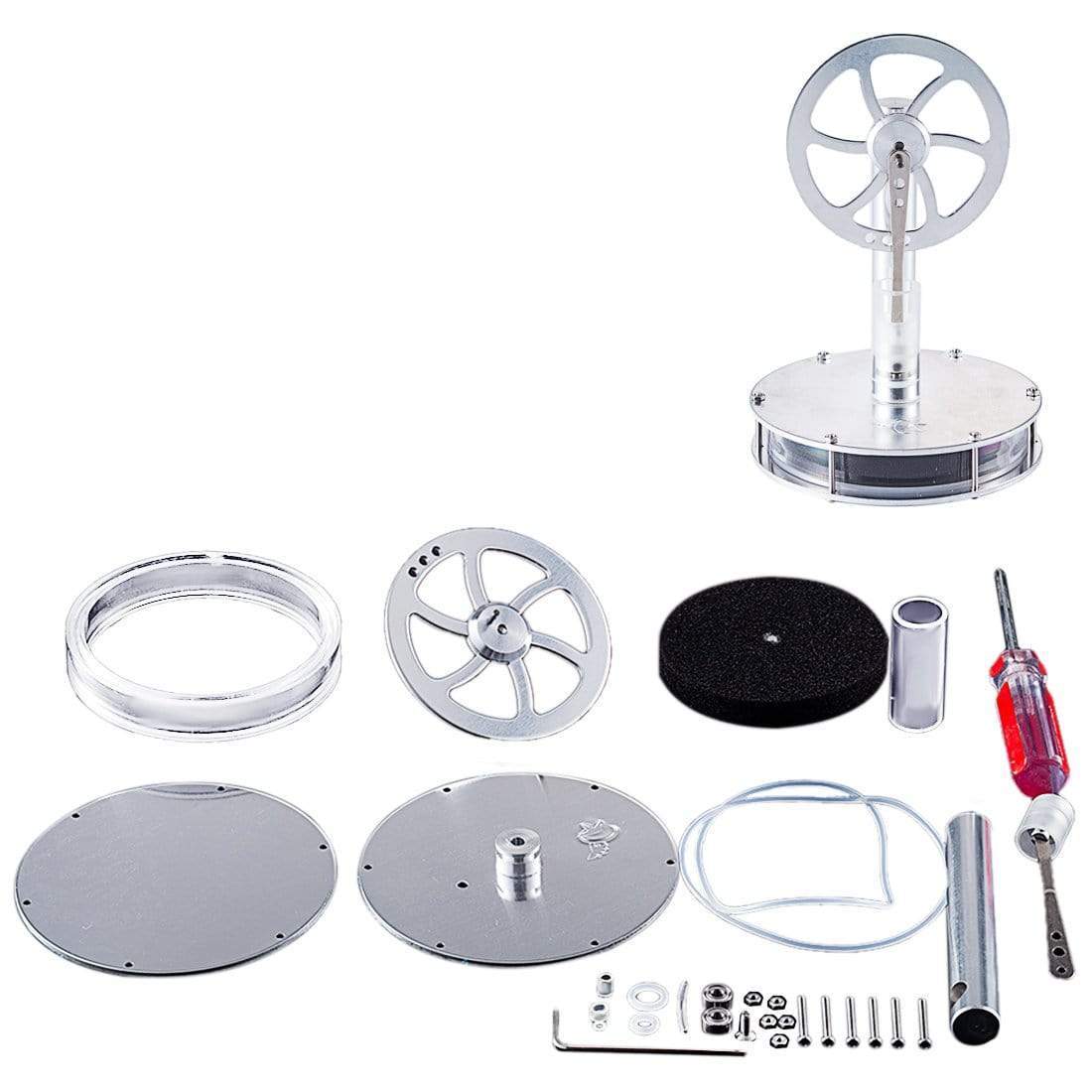
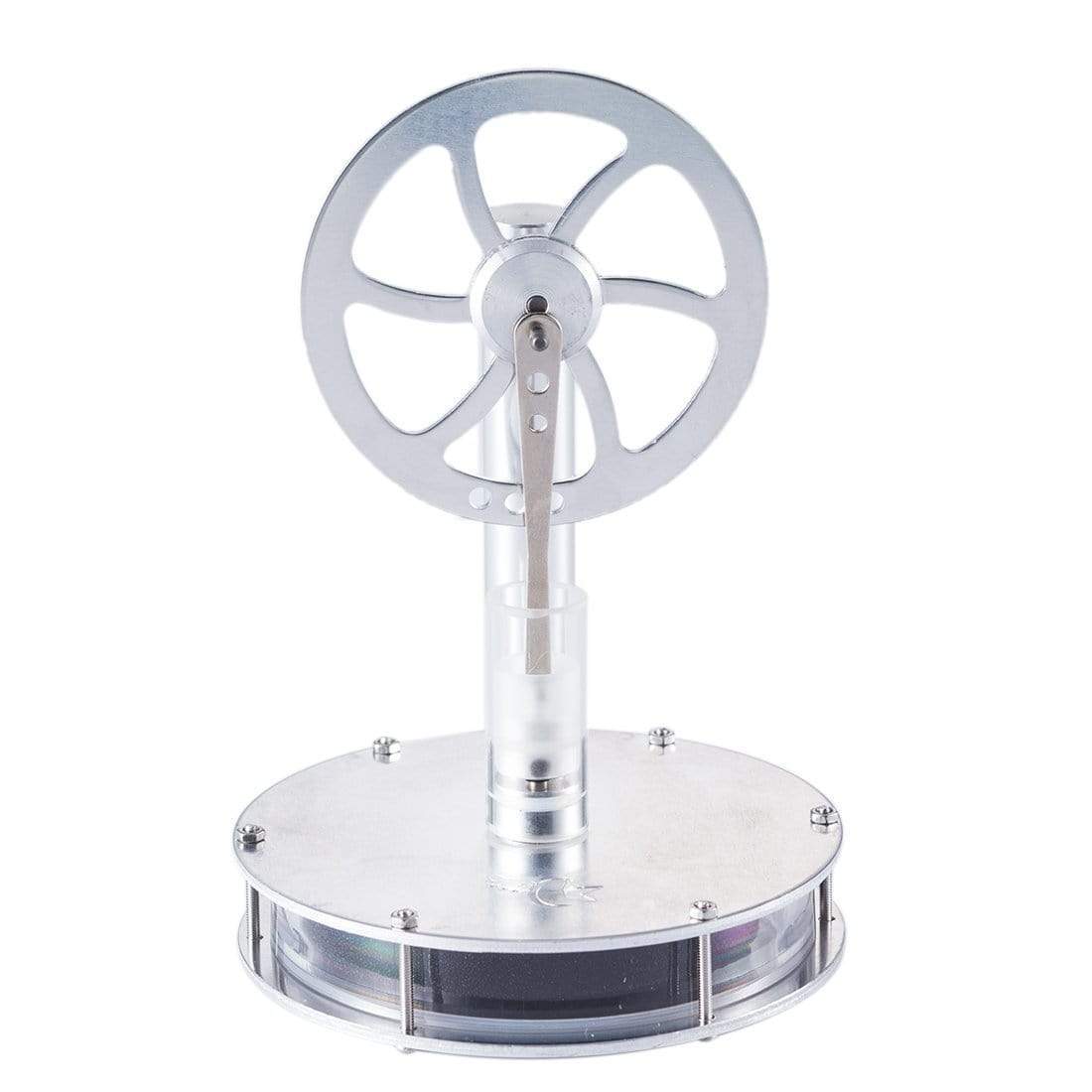
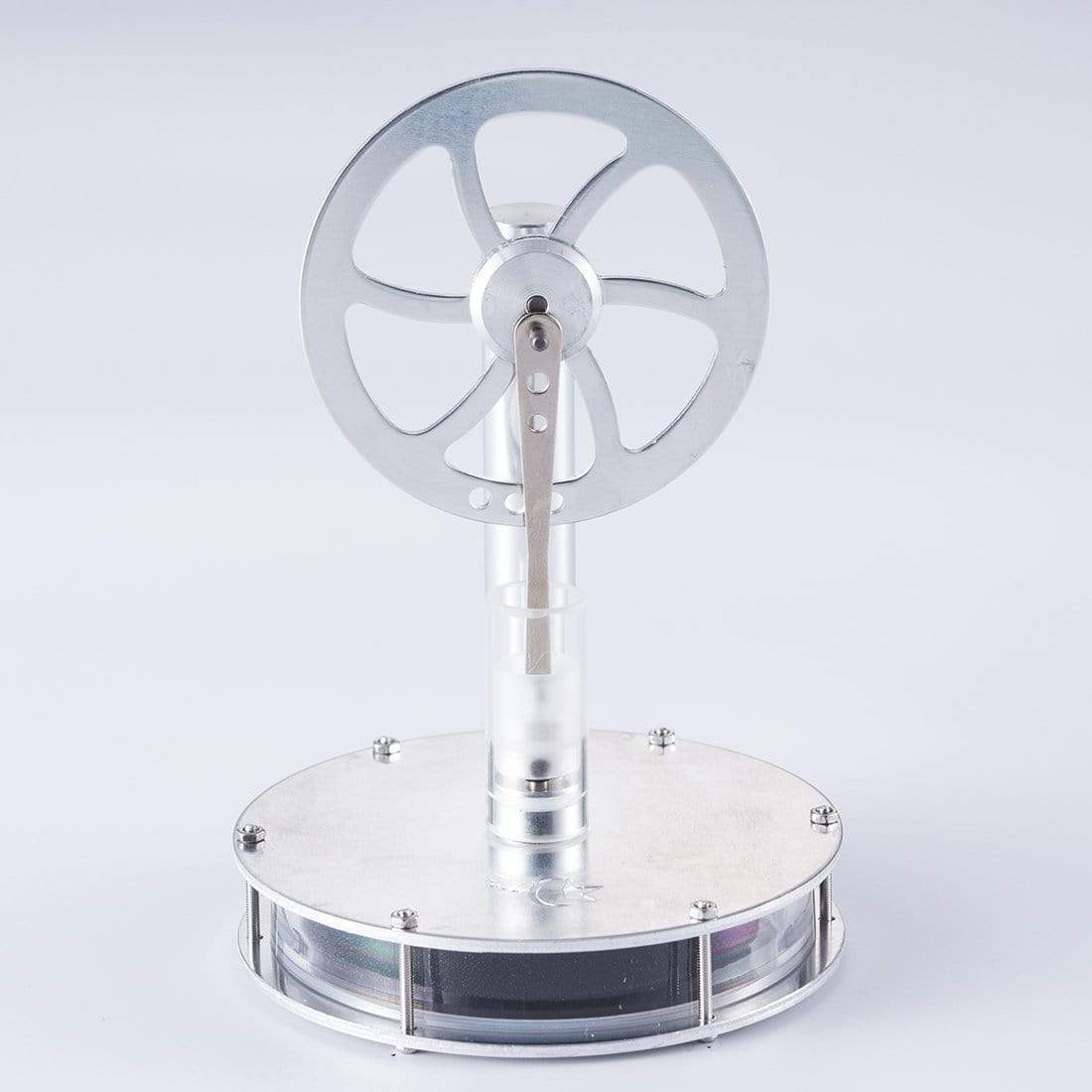
Low Temperature Stirling Engine DIY Kit: Heat Powered Kinetic Art & STEM Gift
Hero Section: Turn Your Morning Coffee into Kinetic Energy
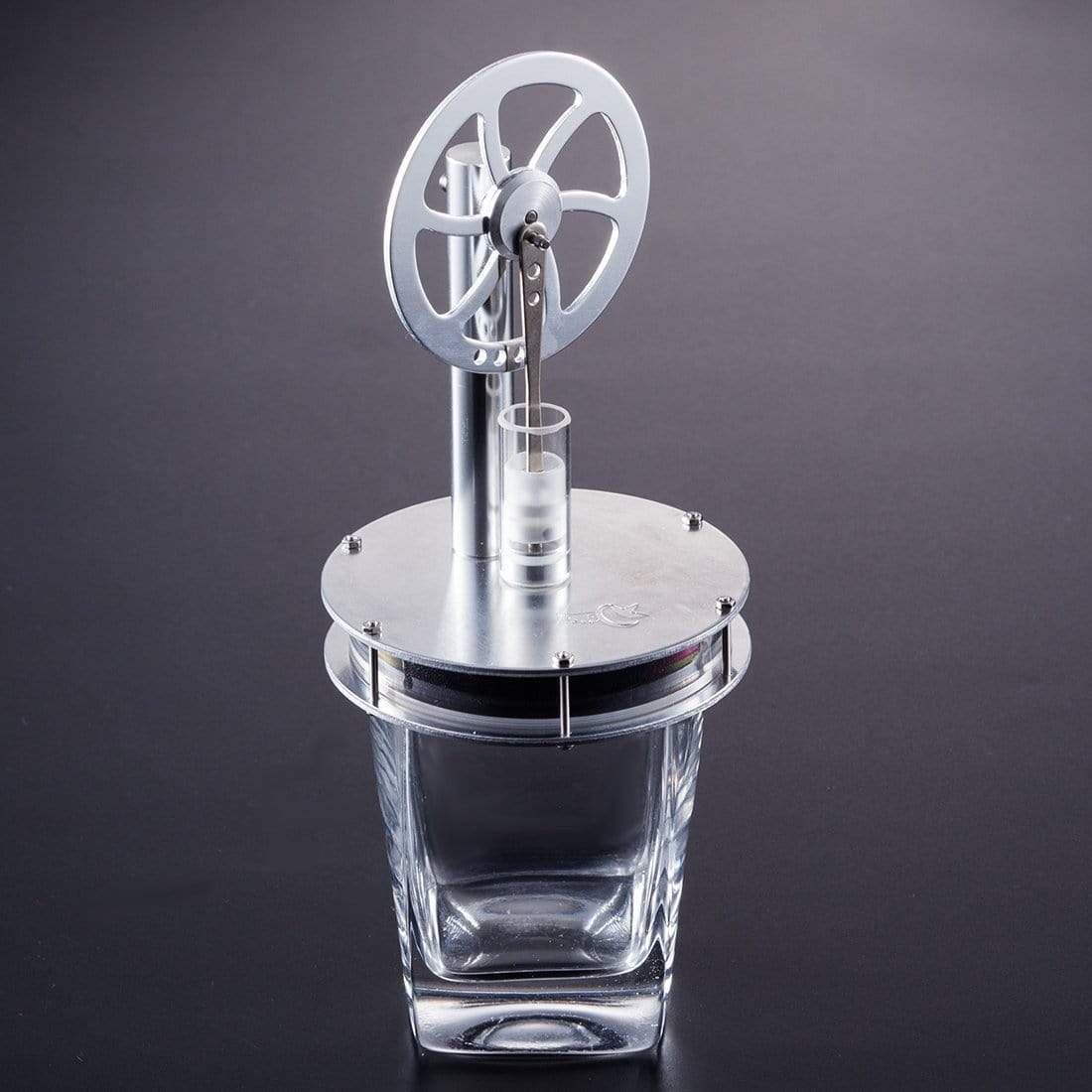
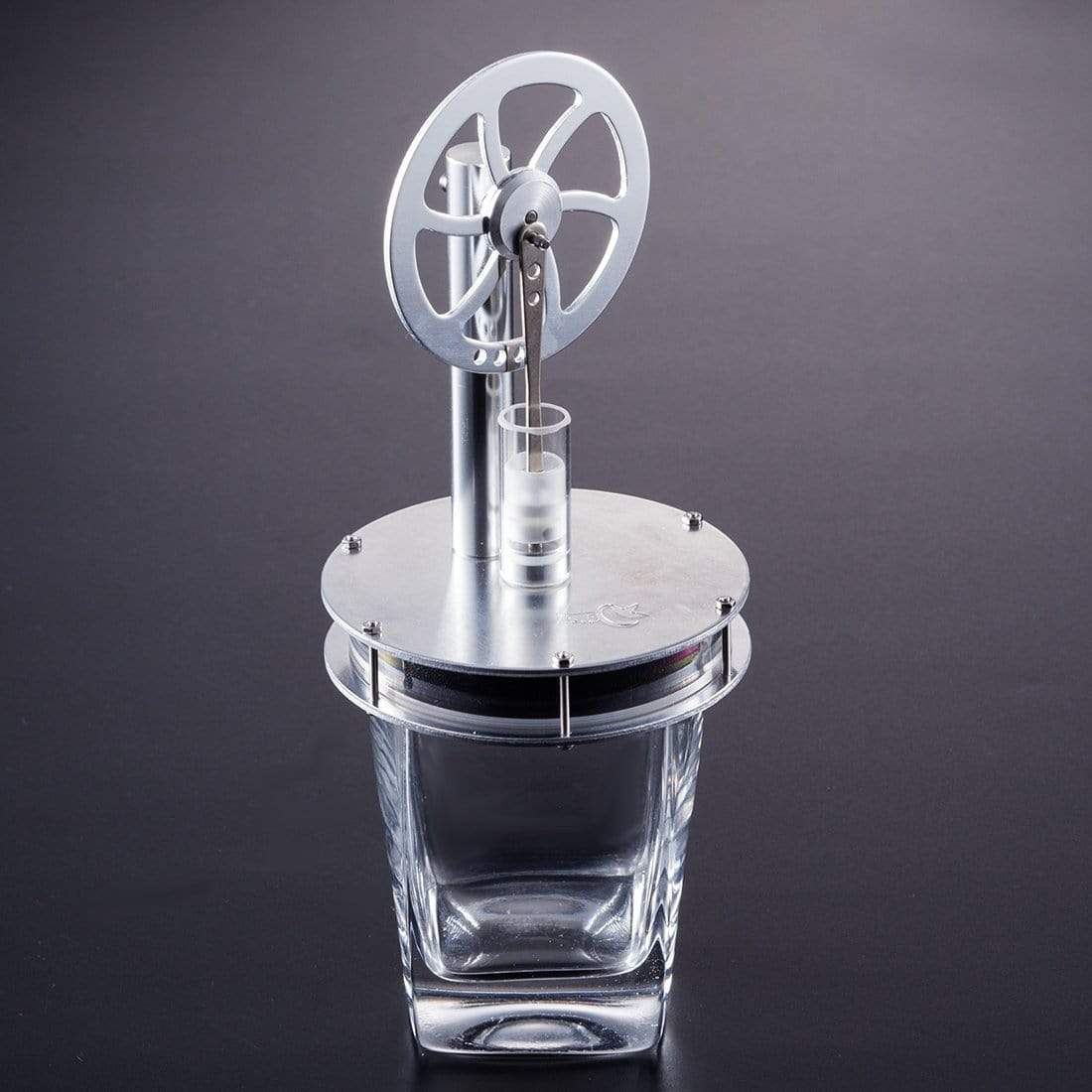
Imagine placing a sleek mechanical device on top of your steaming mug of coffee and watching it come to life. No batteries, no plugs, no noise—just the silent, rhythmic motion of physics in action. This Low Temperature Stirling Engine is more than a model; it is a mesmerizing demonstration of thermodynamics that has captivated over 5,000 U.S. college classrooms. Whether you are an educator demonstrating energy conversion or a professional seeking a sophisticated desk companion to spark creativity, this engine transforms invisible heat into tangible motion.
Why Choose This Stirling Engine?
- Trusted by Educators: This isn't a toy; it's a proven educational tool. Selected by thousands of universities for physics labs, it offers a tangible way to visualize the Stirling cycle—how temperature differences create pressure to drive a piston.
- Safe & Eco-Friendly: Unlike high-temperature engines that require alcohol lamps and open flames, this model runs on simple hot water (approx. 50°C/122°F). It is completely safe for home offices, classrooms, and family demonstrations.
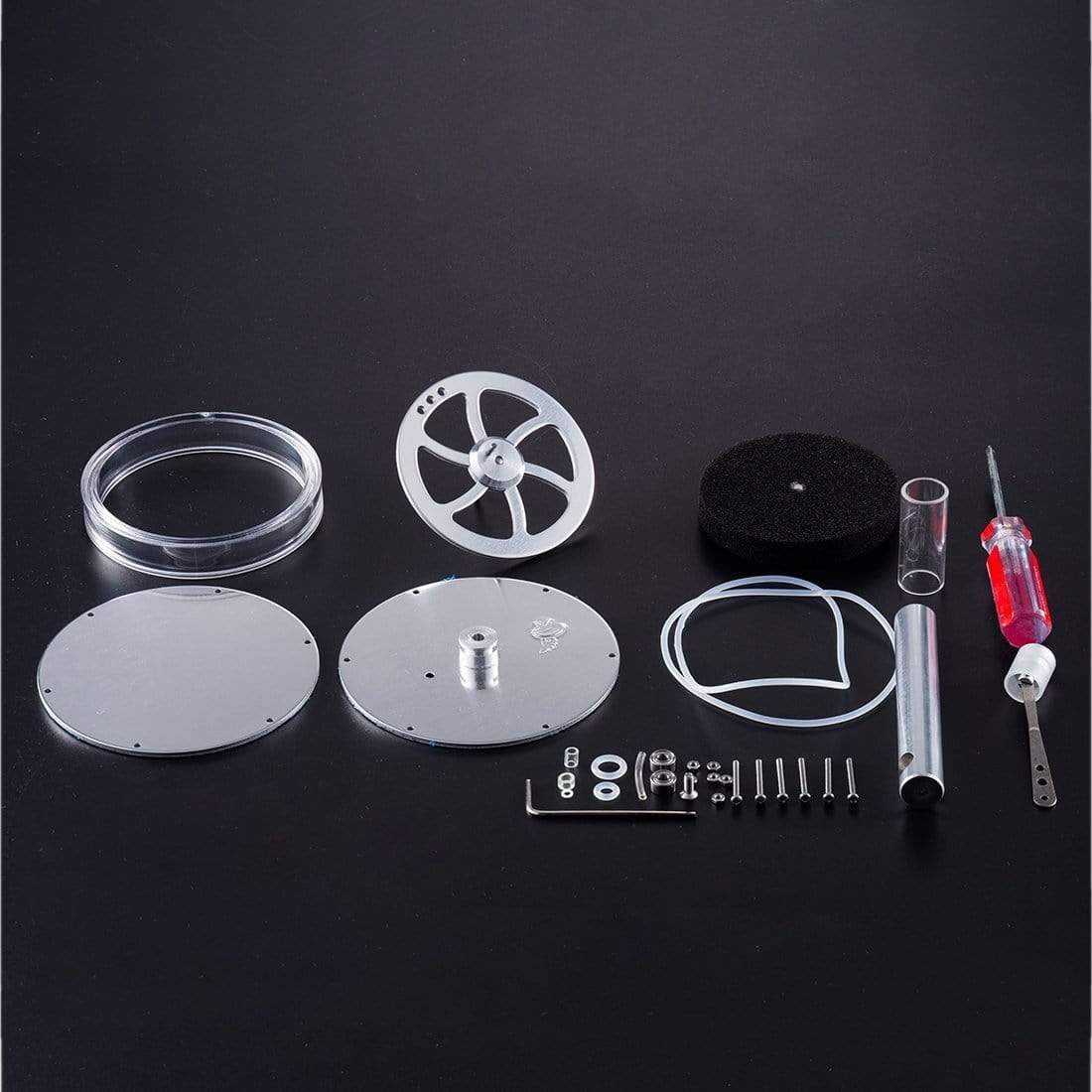
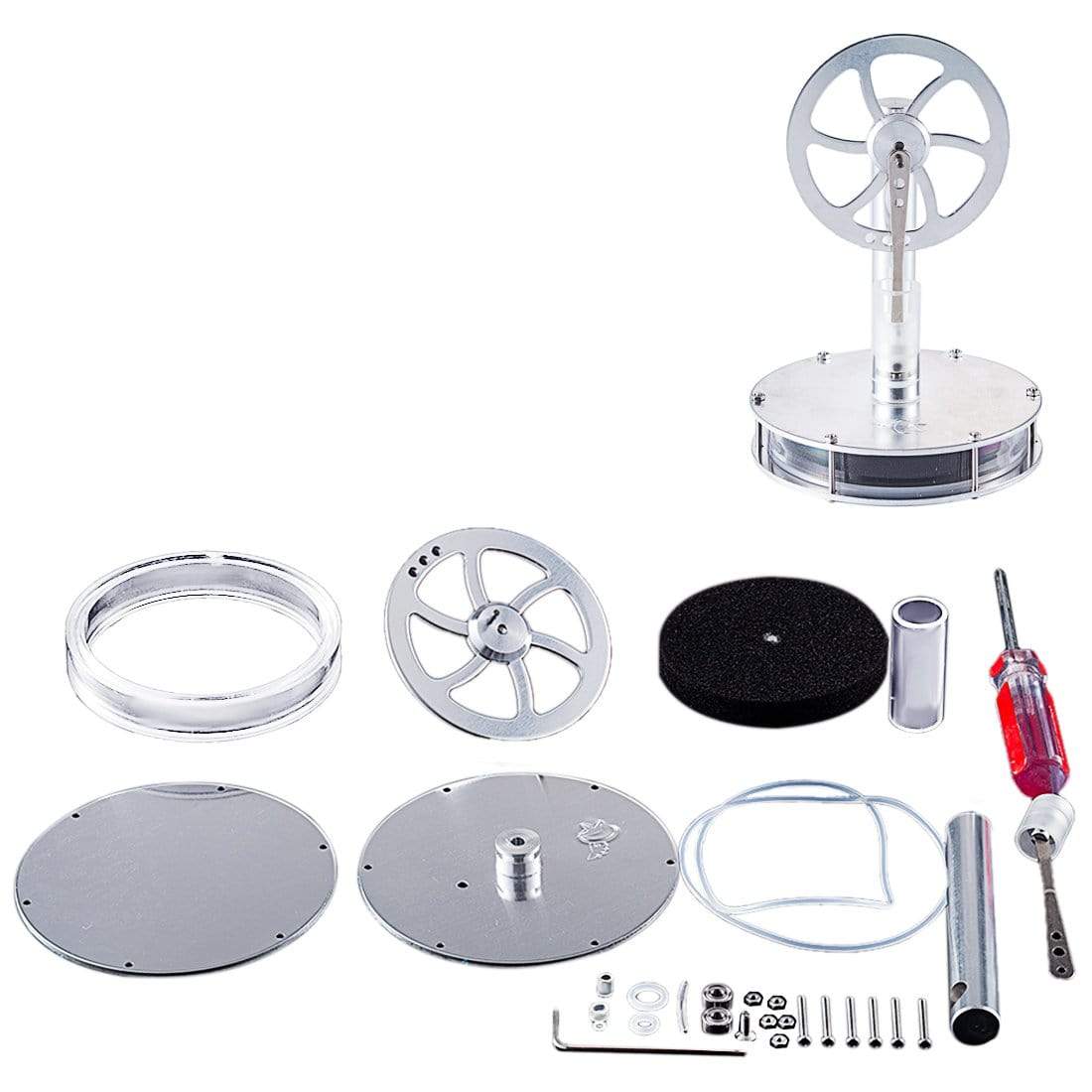
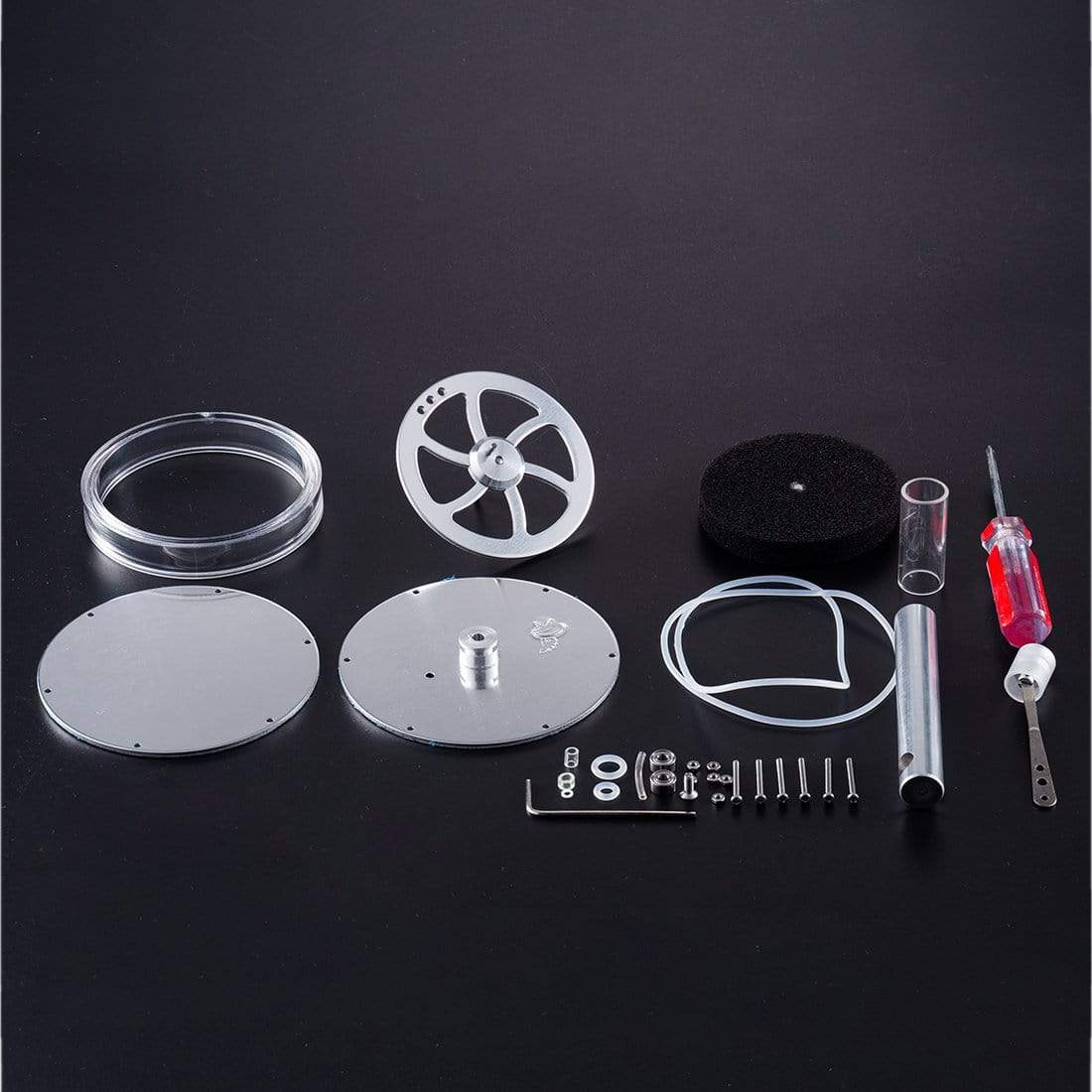
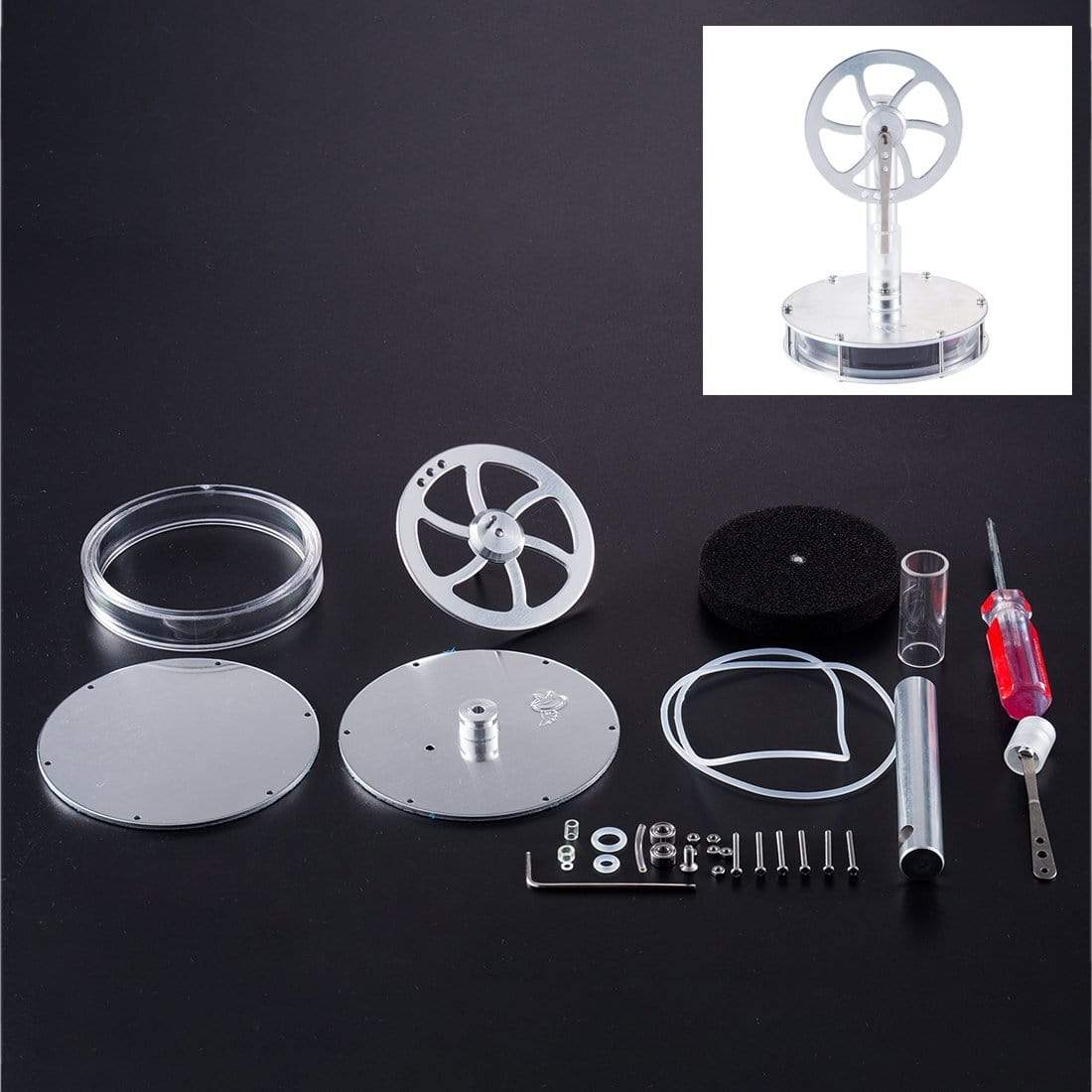
- Innovative Magnetic Assembly: Forget complex screws and glue. This kit features a smart magnetic connection design. You can assemble the entire engine in just 10-15 minutes. It’s a satisfying "snap-together" experience that highlights the precision of the parts.
- The "Coffee Engine" Experience: It serves as the ultimate conversation starter. Place it on your tea or coffee cup, and watch colleagues or friends stop in their tracks to ask, "How does that work?"
Technical Highlights: The Science of Simplicity
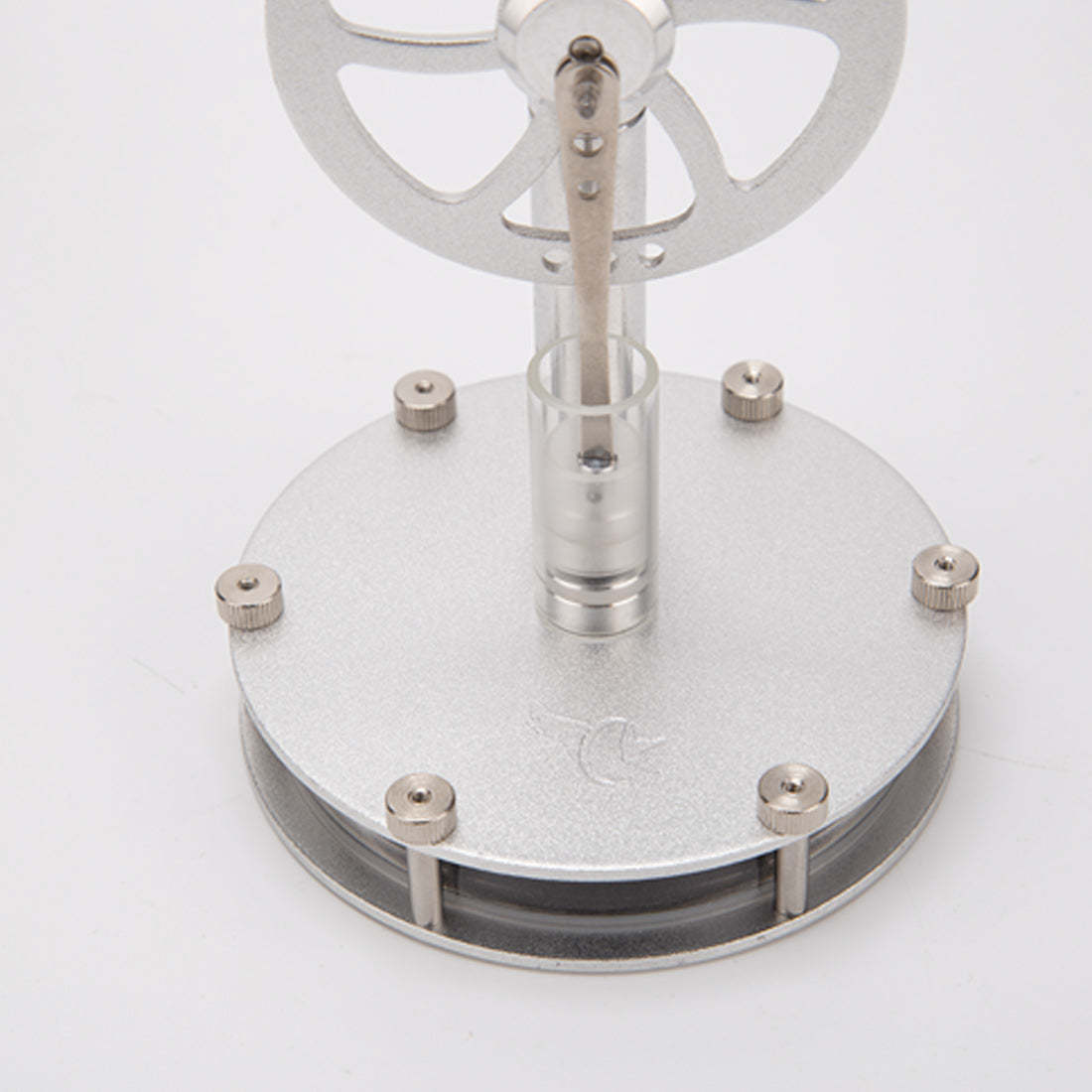
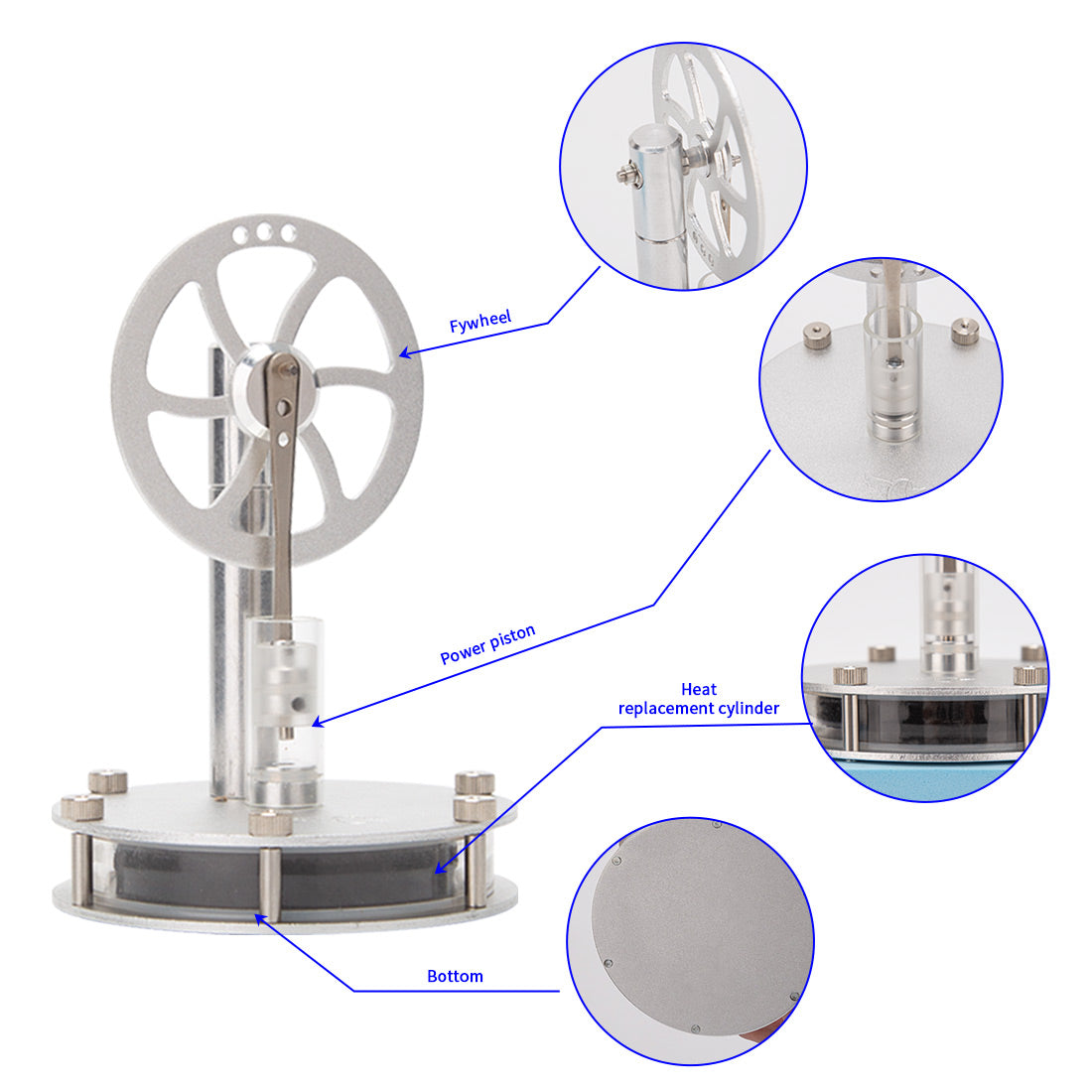
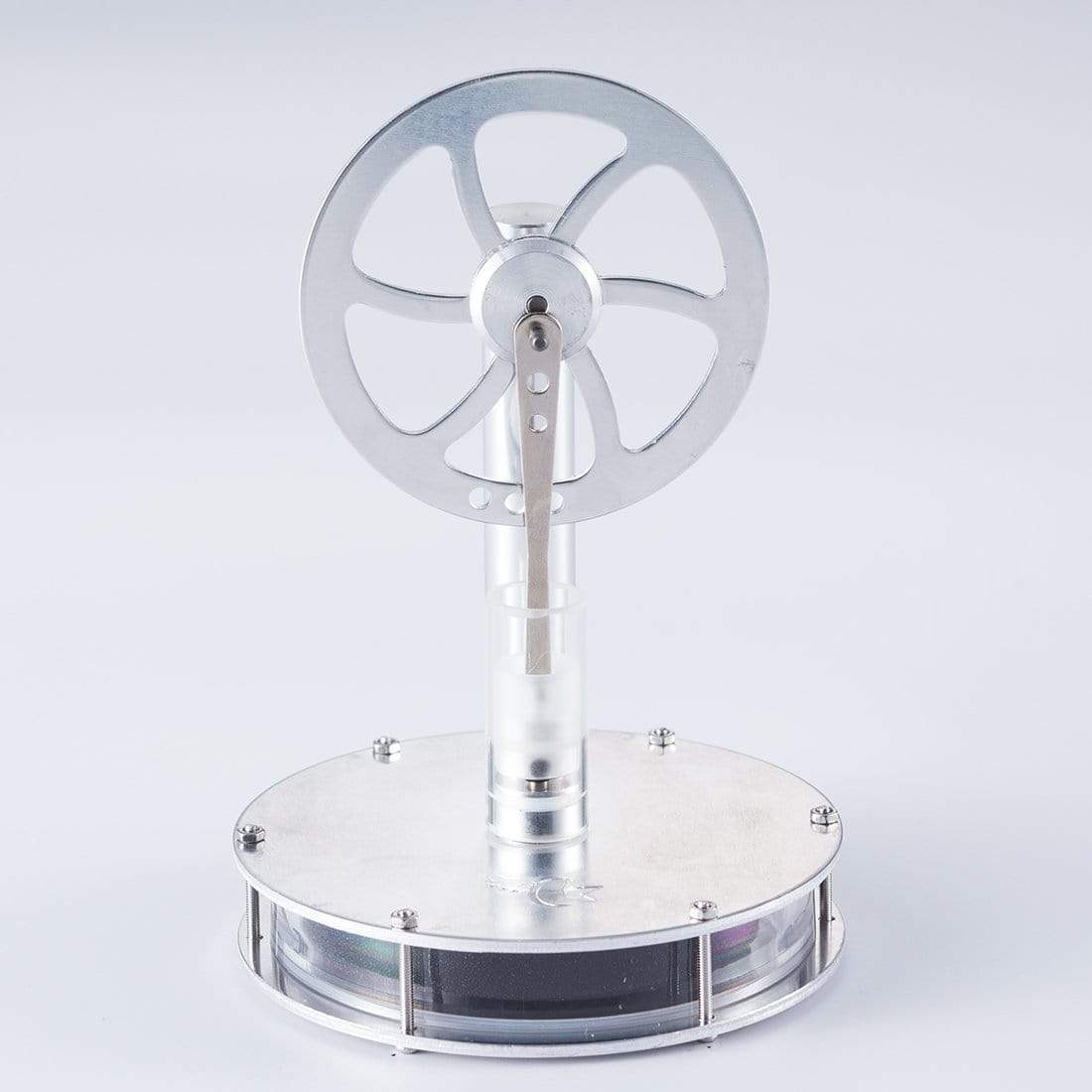
- External Combustion Principle: This is a closed-cycle regenerative heat engine. It works by cyclically compressing and expanding air at different temperatures. The bottom plate absorbs heat from your water, expanding the air inside to push the power piston, while the top plate cools it down.
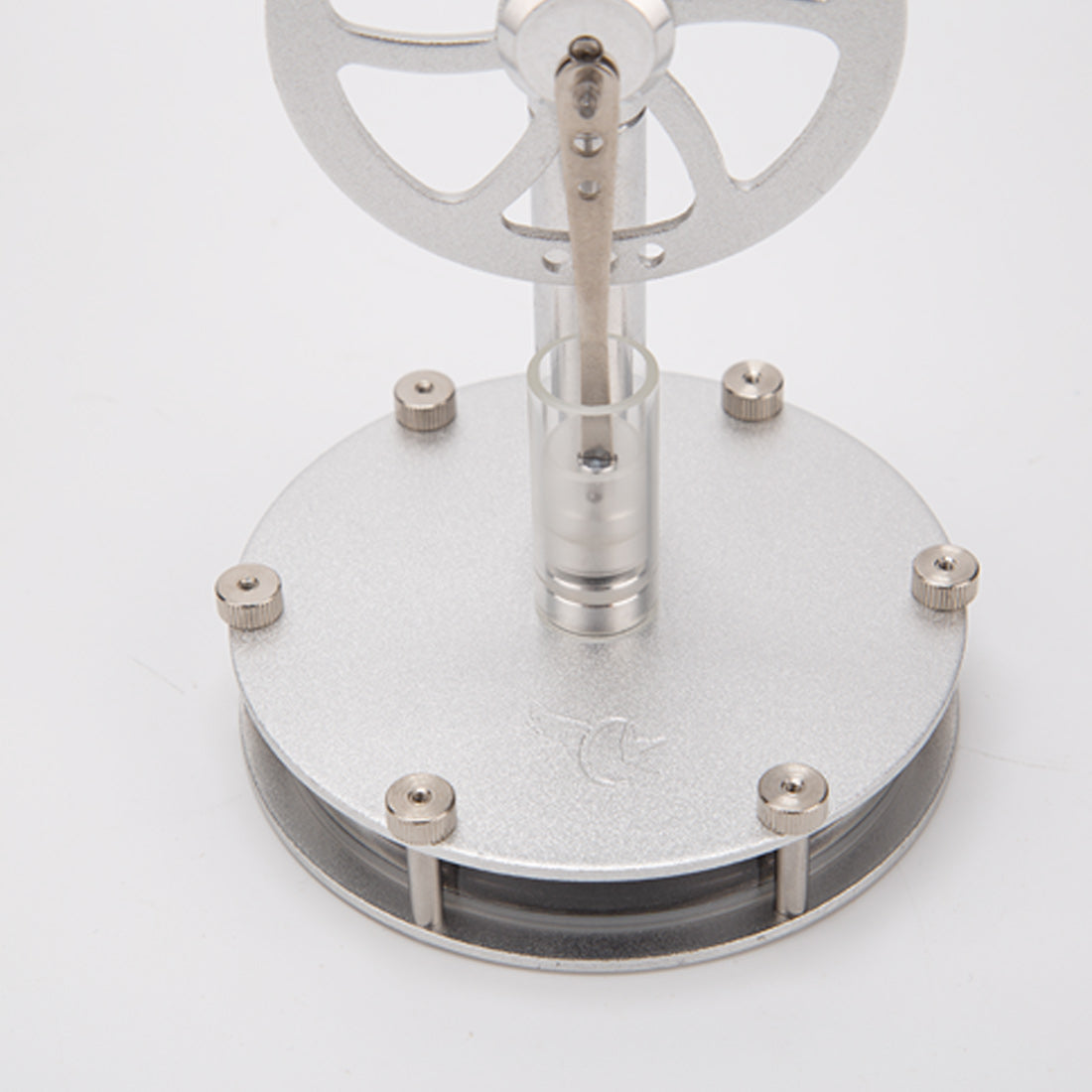
- Low-Friction Design: To run on such low heat differentials, friction must be minimized. We use precision quartz glass for the cylinder and a graphite-impregnated aluminum piston, ensuring the engine runs freely and quietly.
- Visual Transparency: The use of a quartz glass cylinder allows you to see the displacer piston moving inside, providing a clear view of the internal mechanics that drive the flywheel.
Specifications
- Material: Aluminum Alloy / Quartz Glass / Magnetic Components
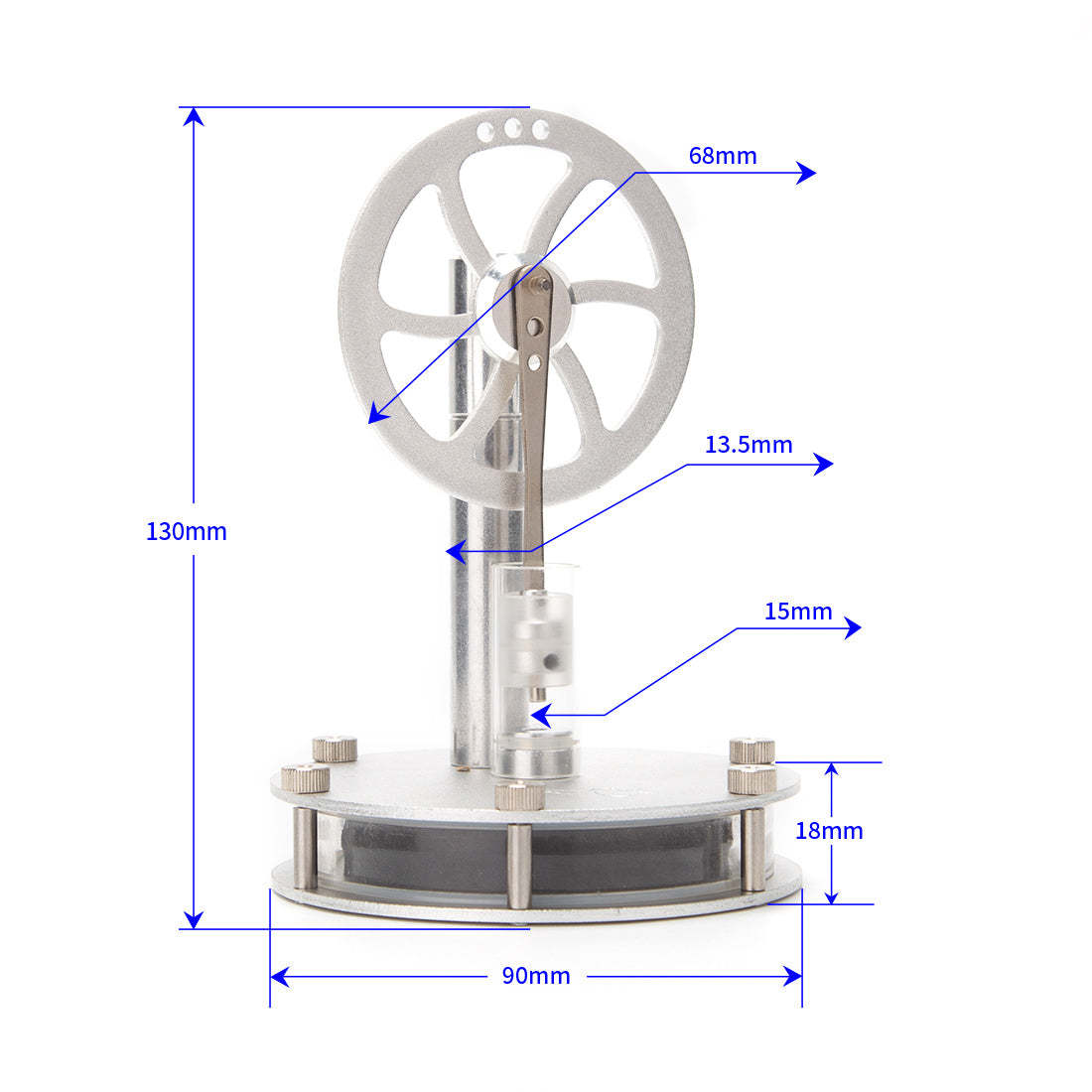
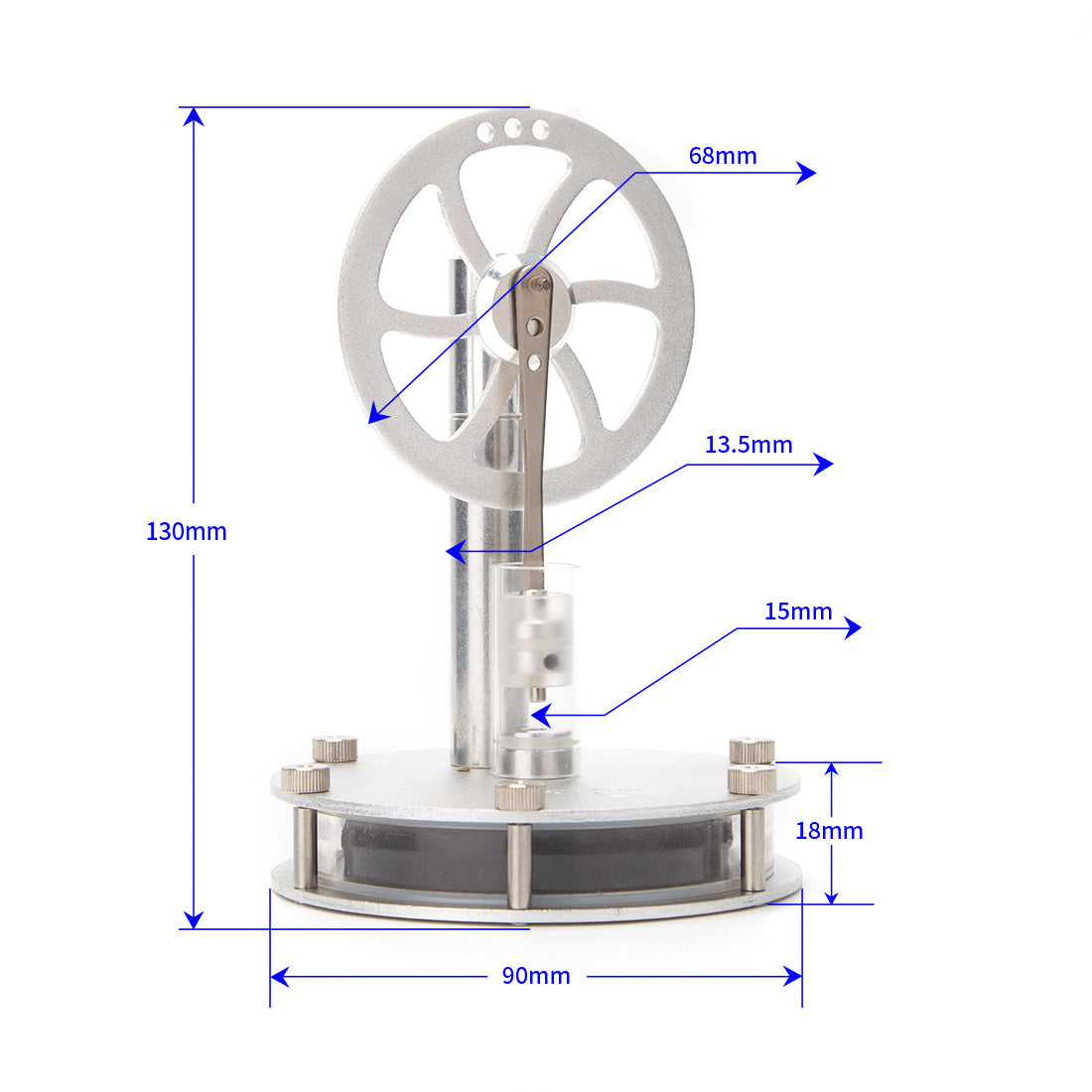
- Dimensions: 9 x 9 x 13.5 cm
- Weight: 160g
- Power Source: Hot Water (Mug/Cup), Tea, Coffee (>50°C)
- Assembly Time: Approx. 10-15 Minutes
- Assembly Type: Magnetic & Screw (Tool included)
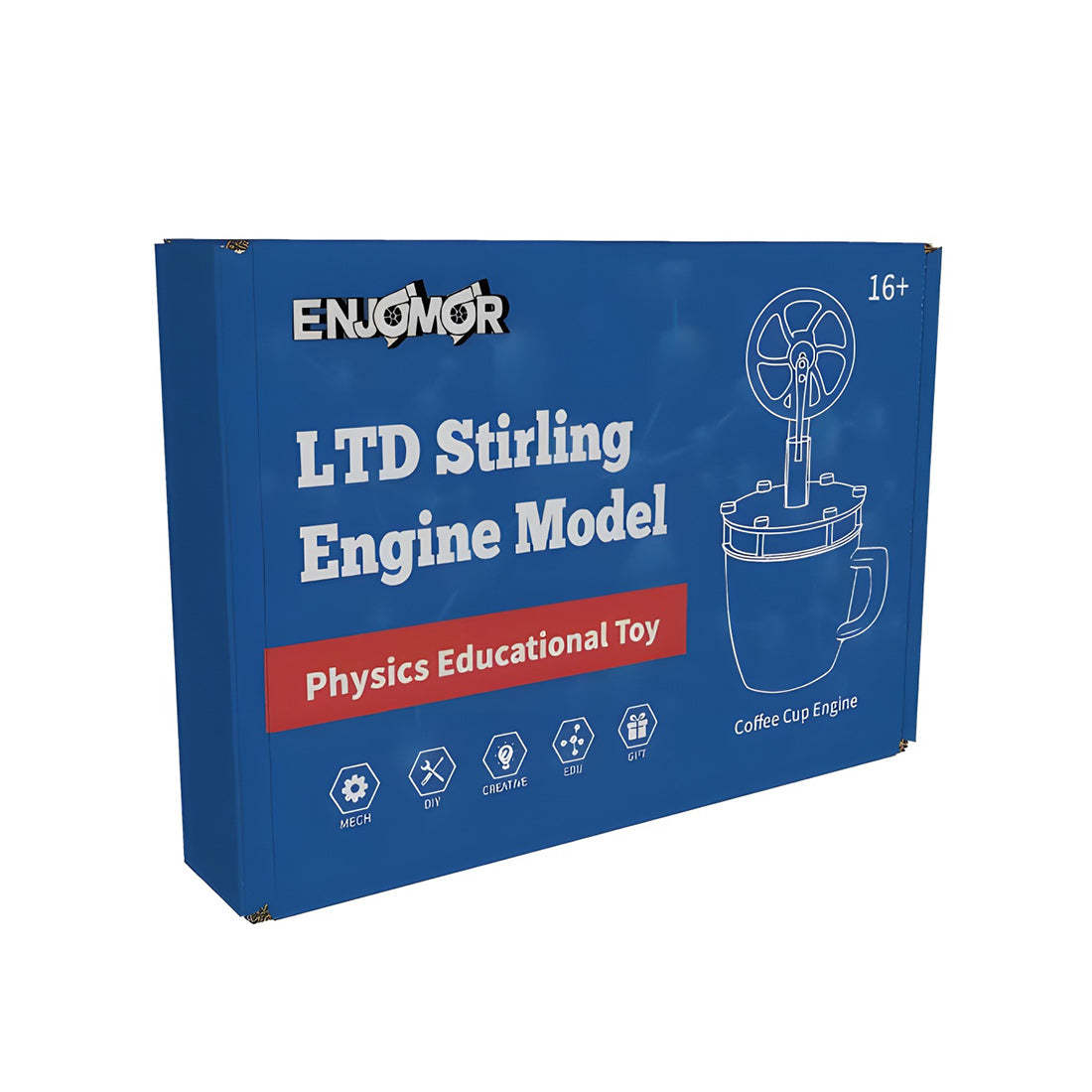
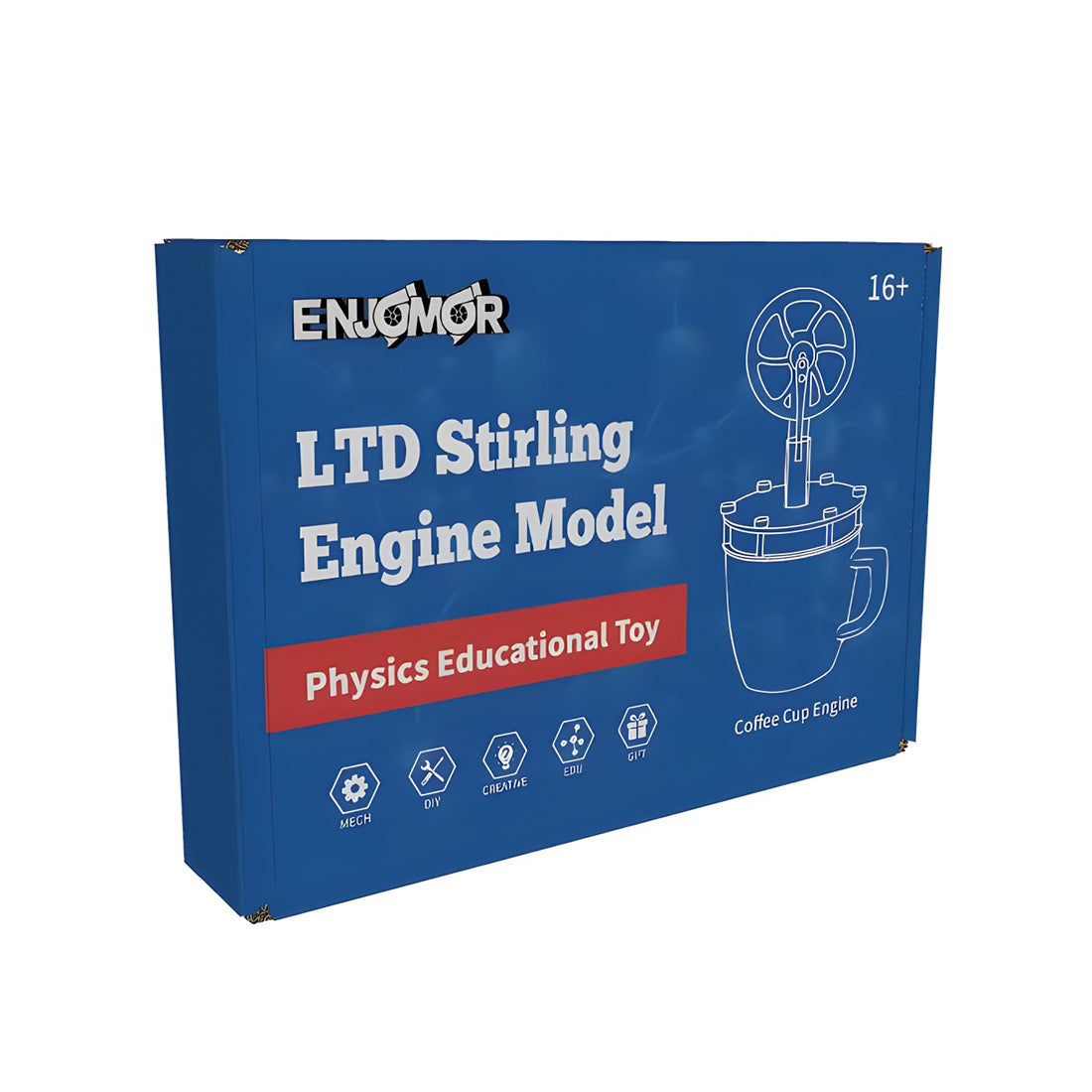
- Packaging: Premium Gift Box
Usage Scenario: The Zen of Physics
It’s a stressful Tuesday afternoon. You brew a fresh cup of tea. Instead of just drinking it, you place this Stirling engine on top. Within seconds, the flywheel begins to spin, faster and faster. The gentle, rhythmic rotation becomes a focal point, a moment of "mechanical zen" that helps you clear your mind. It’s not just a science experiment; it’s a desktop sculpture that connects you to the fundamental laws of the universe.
Important Tips for Best Performance
- Heat Matters: The engine relies on the difference in temperature. The hotter the water (and the cooler the room), the faster it runs. Boiling water works best for high-speed operation.
- Do Not Lubricate: This is crucial. Never add oil or grease to the glass cylinder or piston. Oil will attract dust and create a sticky paste that stops the engine. The graphite/glass interface is self-lubricating.
- Patience is Key: After placing the engine on the hot cup, wait about 20-30 seconds for the bottom plate to heat up, then give the flywheel a gentle push to start it.
Customer Support
We are committed to your scientific exploration. If you encounter any missing parts during assembly or need advice on experiments, please contact our support team at service@helloworld7.com


















 Delivery
 Free Return & Exchange
 Our 60-Day Fit Guarantee, Free Exchange & No-Hassle Returns
 Shipping from US facilities
 Your purchase makes a difference